Indians need no visa for Bhutan in 2026, but an on-arrival permit plus INR 1,200 per night SDF. Documents, permits and fee math explained.
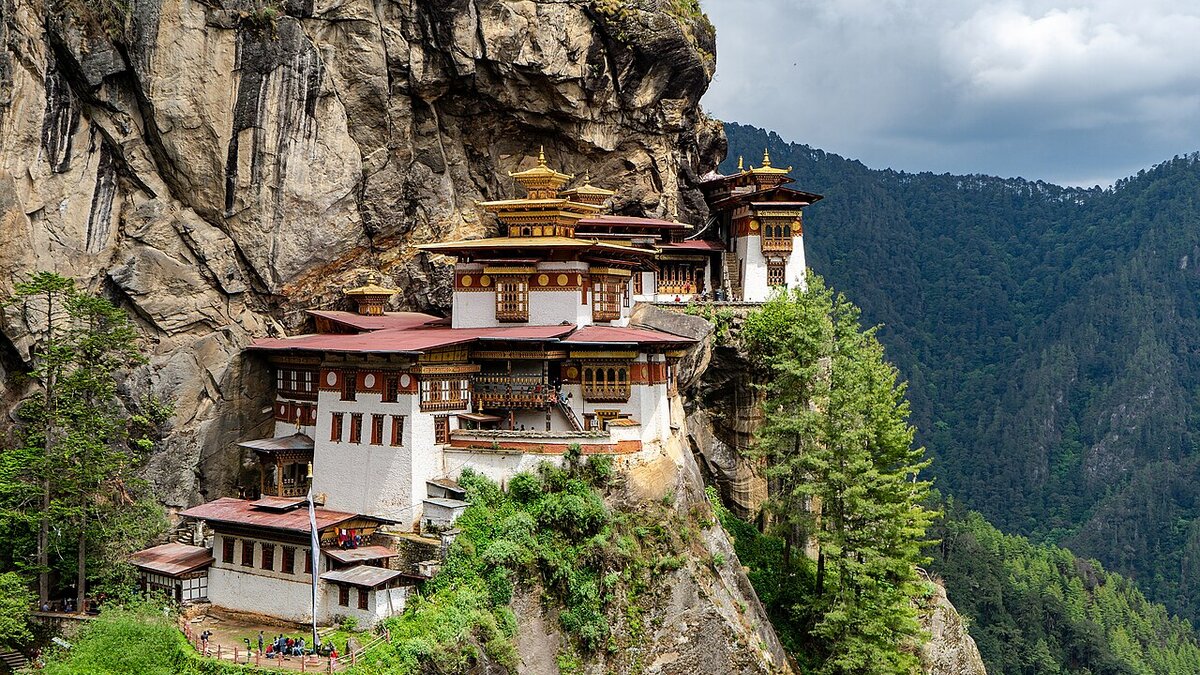
Cover image: Tigers Nest monastery on cliffs above Paro valley in Bhutan — photo by Original: Nina R from Africa Derivative work: UnpetitproleX, CC BY 2.0, via Wikimedia Commons.
No visa, but yes paperwork. Indian citizens do not need a visa to enter Bhutan in 2026, yet free movement is limited to the border towns. Travel beyond them requires an entry permit, which is issued on arrival, plus a Sustainable Development Fee of INR 1,200 per person per night. In practice the permit counter doubles as the payment point: you show a passport or voter ID with photo, pay the fee for your nights, and receive a permit stating where you may travel. Sort this out at the border or at Paro airport before heading inland, and the rest of the trip runs smoothly.
The permit system dates from September 2022, when Bhutan ended unrestricted movement for regional visitors. Since then every Indian traveller going past the border towns needs the document, and there is no way to skip it by booking through an agent. The upside is that the process is same-day and transparent, with the fee fixed in rupees so there is no exchange-rate surprise.
What documents do Indians need for Bhutan?
Two documents are accepted at Bhutanese immigration, and both must be originals in good condition.
| Traveller | Accepted document | Notes |
|---|---|---|
| Indian adult | Indian passport (6+ months validity ideal) | Smoothest option; needed anyway for onward international flights |
| Indian adult | Voter ID card with photo | Accepted in lieu of a passport at land and air entry |
| Child | Birth certificate plus school ID where available | Carry originals; confirm current practice before travel |
Carry two passport-size photographs as well. Counters sometimes ask for them for the permit form, and having your own avoids a scramble at Phuentsholing or Paro. Travellers comparing Himalayan neighbours should read the Nepal entry rules for Indians alongside this guide, since Nepal needs no permit at all.
How does the entry permit work on arrival?
Permits are issued at the immigration counter when you arrive, at Paro airport for flyers and at the land border for overland travellers. The permit names the places you may visit, which for most itineraries covers Thimphu and Paro. If your route goes further, to Punakha, Haa or central Bhutan, check the towns printed on the permit at the counter and arrange the extension before travelling beyond them rather than discovering the gap at a checkpoint. Visitors staying within the border towns for up to 24 hours are exempt from the SDF, which suits a quick cross-border hop but not a real holiday.
How much is the Sustainable Development Fee for Indians?
The SDF for Indian nationals is INR 1,200 per person per night, while other international visitors pay USD 100 per night. Because the ngultrum is pegged at par with the rupee, there is no conversion loss to factor in. The fee is charged for each night you spend inside Bhutan and adds up fast, so budget it as a fixed line item before choosing hotels.
| Trip length | SDF per person (INR) | SDF for two (INR) |
|---|---|---|
| 3 nights | 3,600 | 7,200 |
| 5 nights | 6,000 | 12,000 |
| 7 nights | 8,400 | 16,800 |
A five-night couple trip therefore starts with INR 12,000 in fees before a single hotel bill. That is the single biggest reason Bhutan costs more than Nepal or Sikkim for Indian travellers, and also the reason the kingdom stays uncrowded. The Air India-Drukair interline deal now lets Indians book single-ticket connections into Paro via Delhi, Guwahati or Kolkata, which trims the airfare side of the same equation.
Do Indians need a guide in Bhutan?
Not for the standard Thimphu-Paro circuit, which independent travellers can do with a driver or rental arrangement. Restricted areas and treks further afield come with guide requirements attached to the route permit, so anyone planning the Snowman trail or eastern Bhutan should lock a licensed operator in before arrival. If your trip is only the classic first-visit loop of Thimphu, Paro and Tiger's Nest, the permit plus a pre-booked car is enough. Indians weighing other Asian e-visa destinations can compare the effort with Vietnam's e-visa process or Uzbekistan's visa-free offer.
Frequently asked questions
Do Indians need a visa for Bhutan?
No. Citizens of India do not need a visa. You need an entry permit issued on arrival for travel beyond the border towns, plus the SDF of INR 1,200 per night, with a passport or photo voter ID as your identity document.
How much is the Bhutan entry fee for Indians?
INR 1,200 per person per night, charged for each night spent inside Bhutan. A five-night solo trip costs INR 6,000 in fees and a couple pays INR 12,000, before hotels, food and transport. Short visits confined to the border towns for up to 24 hours are exempt.
Can Indians enter Bhutan with Aadhaar?
No. The accepted documents are an Indian passport or a voter ID card with photo. Aadhaar is not listed as a travel document, so carry one of the two accepted IDs in original form.
Can Indians travel independently in Bhutan or is a tour mandatory?
The classic Thimphu and Paro circuit can be done independently with a permit and a car. Guided arrangements become necessary for restricted regions and treks, where the route permit carries guide conditions. Book operators in advance for anything beyond the standard loop.