You cannot drink tap water in Thailand in 2026. Treatment at the plant meets WHO standards but ageing pipes and tanks recontaminate it. Drink bottled, filtered or boiled water and be careful with ice and salads.
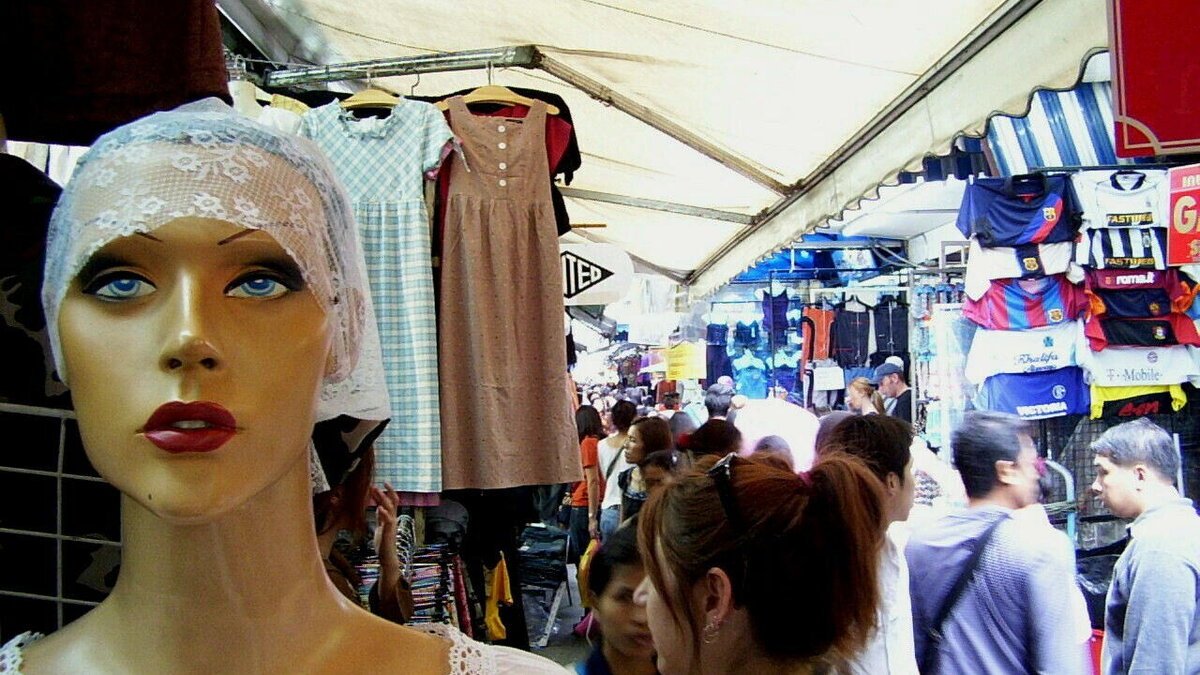
Cover image: a street market with bottled water and food stalls in Bangkok, Thailand — photo by burrito estupendo, CC BY 2.0, via Wikimedia Commons.
You cannot drink tap water in Thailand in 2026, including in Bangkok, Chiang Mai, Phuket and Pattaya. The Metropolitan Waterworks Authority and Provincial Waterworks Authority treat water to WHO standards at the plant, but ageing distribution pipes, rooftop tanks and building plumbing recontaminate it before it reaches the tap. Hotels, guesthouses and restaurants all serve bottled or filtered water for drinking, and locals do not drink straight from the tap. Even if the water looks clear, it can carry bacteria and sediment that cause stomach upset within a day.
The rule applies to brushing teeth in rural stays as well. In cities most visitors brush with tap water without issue, but for drinking, cooking that will not be boiled, and baby formula the safe choices are sealed bottled water, filtered dispensers, boiled water or water purified by UV or reverse osmosis. Thailand is hot and humid, so you will drink more than at home. Plan on 2 to 3 litres per person per day and keep a sealed bottle with you on transport where shops are scarce.
Related guides for Indians: do I need a visa for Thailand from India for entry and TDAC, how much does a Thailand trip cost from India for daily budgets, best time to visit Thailand from India for climate by month, and can you drink tap water in Bali for the Bali parallel.
Why tap water in Thailand is not safe to drink
The treatment stage is not the problem. Both the MWA in Bangkok and the PWA elsewhere publish compliance reports showing treated water leaves the plant within WHO guidelines for turbidity and bacteria. The risk is in the last kilometres and the building.
- Pipe age and pressure: distribution networks in Bangkok and older provincial towns include decades-old mains. Intermittent pressure, road works and leaks allow intrusion. Area notices for turbidity after pipe repairs are common in the hot season from March to May.
- Rooftop tanks: many shophouses, guesthouses and low-rise hotels pump to roof tanks that sediment and are cleaned irregularly. Even newly treated water that sits in a warm tank can develop biofilm.
- Inconsistent building plumbing: hostels and street stalls often use flexible hoses and unclean jugs. The safest premise is to treat every tap as utility water only.
Thai public-health agencies advise residents to boil tap water before drinking, and 7-Eleven and FamilyMart ubiquity makes bottled water the default. Environmental groups estimate Thailand consumes more than 4 billion plastic bottles yearly, which has pushed filtered refill stations into malls, BTS stations and co-working spaces.
What is safe to drink in Thailand instead?
Use this hierarchy everywhere from Bangkok to the islands:
| Option | Is it safe? | Typical price for Indians | Where you find it |
|---|---|---|---|
| Sealed bottled water (established brands) | Yes when seal is intact | INR 25 to 45 for 600 ml; INR 35 to 60 for 1.5 L | 7-Eleven, supermarkets, hotels, restaurants |
| Filtered refill or dispenser (RO or UV labelled) | Yes if labelled and maintained | INR 15 to 30 per litre via refill or 1 baht machines | Malls, BTS stations, hostels with RO units |
| Boiled water, tea, coffee | Yes when freshly boiled | Included with meal or INR 30 to 60 | Hotels with kettle, cafes, markets |
| Factory tube ice (cylinder with hole) | Usually yes | Included in drink | Convenience stores, chain restaurants |
| Crushed or unclear bag ice | No — avoid | — | Some beach stalls and older bars |
Check the seal. Twist caps should click and the ring should be intact. Refuse bottles that are already open, crushed or refilled at roadside stalls. In islands such as Phi Phi or Lanta some resorts desalinate or truck water, so refill quality depends on maintenance. If the dispenser looks dusty or the 1-baht machine has no service sticker, choose sealed bottles instead.
How to handle ice, salads, fruit and brushing
- Ice: tube ice with a hole in the centre is made from purified water in factories under Thai FDA regulation and is the norm in chains. Crushed or irregular bag ice may be made from tap water. When in doubt ask if it is factory ice and skip it in small stalls that chip from a block.
- Salads and fruit: washed in tap water in night markets. Peel fruit yourself and eat cooked vegetables if your stomach is sensitive in the first 48 hours. Most mid-range restaurants wash with filtered water, but markets do not.
- Brushing: in Bangkok and Chiang Mai hotels most visitors brush with tap water. If you are immunocompromised, have a baby, or are in a rural homestay, use bottled water to rinse.
- Baby formula: always use boiled then cooled bottled water, not tap, even in 5-star hotels. Bring a travel kettle or request boiled water from reception and cool before mixing.
Water for showering and washing hands is fine. Keep your mouth closed in the shower if you are sensitive and avoid swallowing pool water, where treatment varies widely by property.
How to stay hydrated cheaply without plastic waste
- Carry a reusable bottle and refill at RO or UV stations in malls, BTS stations and hostels. A litre via refill at INR 15 to 30 costs half the price of a sealed bottle and avoids plastic.
- Hotels in Bangkok often place two complimentary sealed bottles in the room daily. Housekeeping refills them on request from filtered dispensers rather than new plastic, so ask at reception.
- Coconut water, sealed juices and freshly brewed Thai tea are safe alternatives when served from sealed containers or freshly boiled water, though they carry sugar.
- Electrolytes help in April and May when Bangkok exceeds 35C and islands are humid. Oral rehydration salts are available at 7-Eleven for about INR 30.
If you experience diarrhoea, mild cases typically resolve in 24 to 48 hours with fluids and rest. Seek care at private hospitals in Bangkok, Chiang Mai or Phuket if fever exceeds 38.5C, blood is present, or symptoms persist beyond two days. Travel insurance that covers outpatient care in Thailand keeps costs predictable, with private consultations around INR 2,500 to 5,000 before tests.
Frequently asked questions
Can you drink tap water in Bangkok hotels?
No. Even in Bangkok never drink the tap, including in 4- and 5-star hotels. The tap is for washing only. Drink the sealed bottles provided or water from a labelled RO or UV dispenser.
Is the ice in Thailand safe for tourists?
Tube ice with a hole made in factories is usually safe and is the standard in chains and convenience stores. Avoid crushed or block ice from beach stalls that may use tap water.
Can you brush your teeth with tap water in Thailand?
Most visitors do so in cities without issue. If you are in a rural homestay, have a baby or are immunocompromised, rinse with bottled or boiled water to be cautious.
What should Indians carry for safe water in Thailand?
A reusable bottle, oral rehydration salts and a small roll of purification tablets as backup. Refill at RO or UV stations in malls and BTS stations where available and buy sealed bottles elsewhere.