Hong Kong tap water is fully treated and meets WHO drinking-water standards. When the tap is fine, when to boil, and how to save money refilling.
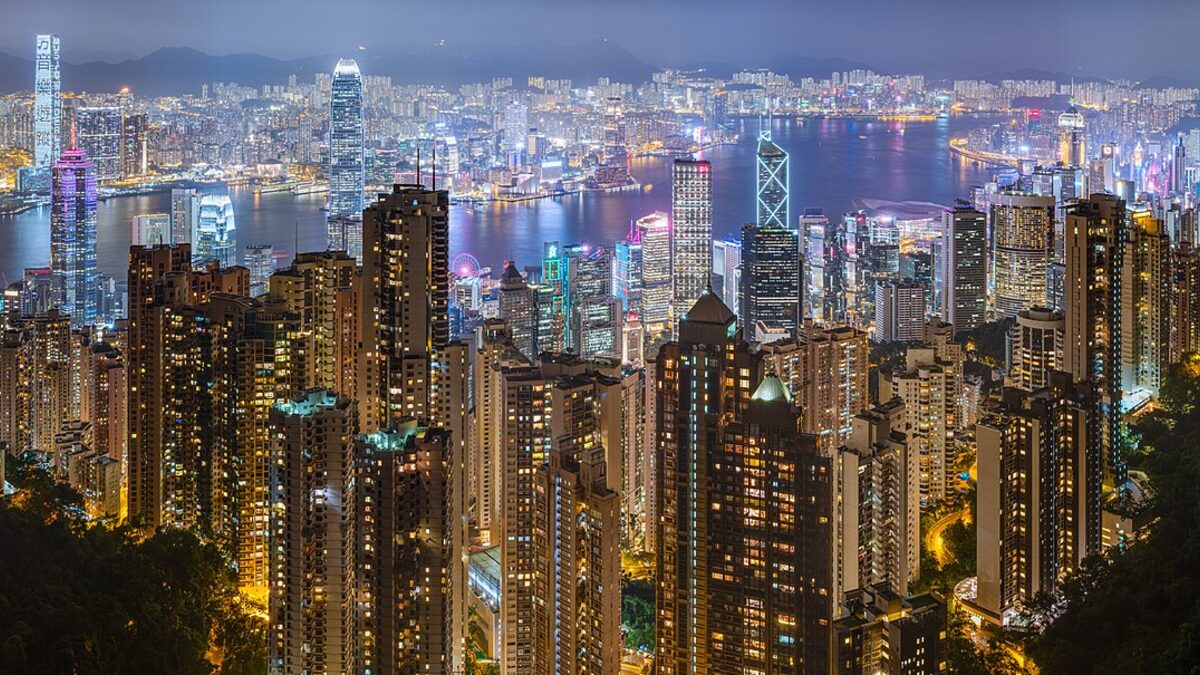
Cover image: Victoria Harbour and the Hong Kong skyline glowing at night — photo by Benh Lieu Song, CC BY-SA 4.0, via Wikimedia Commons.
Yes, you can drink tap water in Hong Kong: the supply is fully treated and conforms in all respects, chemically and bacteriologically, to World Health Organization drinking-water standards. The Water Supplies Department collects, stores, purifies and distributes the water, and access to an improved water source stands at 100%. That puts Hong Kong in a small club of Asian cities where the tap is officially as safe as the bottle. Local habit tells a subtler story. Many residents still boil water before drinking, though by the official assessment this is generally not necessary. For a visitor staying a few days, the practical rule is simple: tap water in modern hotels and malls is fine, bottled or boiled water buys peace of mind in older walk-up buildings, and you never need to pay hotel-minibar prices for basic hydration. Visitors comparing notes across the region can see our Bali tap-water guide, where the answer runs the opposite way, and our Hong Kong tipping guide for the city's other daily-spending question.
Why Hong Kong tap water is safe to drink
Treatment plus standards plus monitoring, all three. Raw water from local catchments and the Dongjiang supply is put through full treatment including chemical coagulation and sedimentation before distribution, and the finished product is tested against WHO guideline values for both chemicals and bacteria. Coverage is universal across the territory, from Central towers to outlying-island villages. This is not a new or provisional status; Hong Kong's treated supply has met international benchmarks for decades. The habit of boiling is cultural memory as much as caution, from eras when storage tanks and plumbing were less regulated. If your hotel room kettle gets daily use, it is mostly tradition at work.
When to stick to bottled or boiled water
Trust the treatment, but read the building. The one variable the official guarantee cannot cover is the last few metres of pipe inside an ageing building. Very old tong lau walk-ups, subdivided flats and budget guesthouses in districts like Chungking Mansions or parts of Sham Shui Po may have roof tanks and plumbing of uncertain vintage. There, run the tap for a few seconds before use, boil what you drink, or buy bottled water from any convenience store for a few Hong Kong dollars. Signs of trouble are obvious: discoloured water, metallic taste or visible tank neglect. Modern hotels, airports, malls and MTR stations present no such question. Icy drinks, salads and brushed teeth need no second thought anywhere a tourist normally goes. The city is courting visitors heavily through its global tourism campaign, and no part of that pitch involves warning tourists off the taps.
| Situation | Verdict | Notes |
|---|---|---|
| Modern hotel or serviced apartment | Drink freely | Treated supply, maintained plumbing |
| Airport, malls, MTR stations | Drink freely | Water fountains are maintained for public use |
| Older guesthouse or walk-up flat | Boil or buy bottled | Ageing tanks and pipes are the only real variable |
| Discoloured or odd-tasting water | Do not drink | Run the tap, report it, switch to bottled |
| Ice, salads, brushing teeth | Fine anywhere tourist-grade | Made from the same treated supply |
Saving money and plastic on Hong Kong water
Carry a bottle and refill; Hong Kong makes it easy. Drinking-water dispensers stand in country parks, many MTR stations and shopping centres, and every 7-Eleven and Circle K sells large bottles cheaply. A week's worth of minibar water can cost more than a day's meals, so the refill habit pays twice: once in dollars, once in plastic avoided. If you prefer hot drinks, the in-room kettle plus tap water is exactly what most locals do at home. One etiquette note for restaurants: the tea served automatically at Chinese restaurants is the table water equivalent, and the small tea charge on the bill is normal practice, not a scam.
Frequently asked questions
Is Hong Kong tap water safe to drink?
Yes. It is fully treated and meets WHO drinking-water standards chemically and bacteriologically, with universal coverage across the territory.
Why do locals boil water in Hong Kong?
Largely habit carried over from earlier eras of less-regulated building plumbing. The official position is that boiling is generally not necessary.
Can you drink tap water in Hong Kong hotels?
Yes in any modern hotel. In very old budget guesthouses, boiling or bottled water is the cautious choice because of ageing in-building pipes and tanks.
Is Hong Kong tap water free at restaurants?
Western restaurants usually serve iced water free. Chinese restaurants serve tea automatically and add a small customary tea charge to the bill.