

The World Cup 2026 knockout stage has compressed a continent-wide tournament into a handful of cities, sending Airbnb searches to a tournament high, pushing host-city hotel rates to an average $499 a night and setting up a costly final at MetLife Stadium on 19 July.
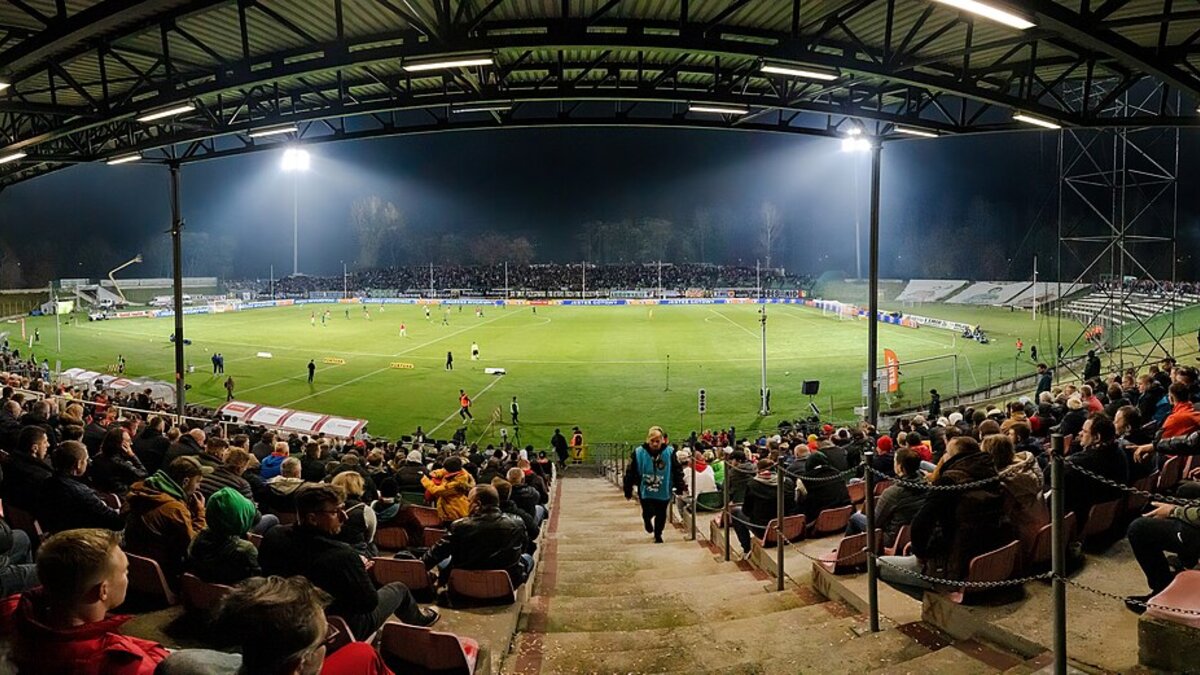
Cover image: football fans travelling for the world cup — photo by Krzysztof Popławski, CC BY 4.0, via Wikimedia Commons.
The FIFA World Cup 2026 knockout rounds are funnelling millions of travelling fans into a shrinking list of cities, and the booking data shows it. Airbnb has reported its biggest single-week surge in searches of the entire tournament as the last-16 bracket firmed up, with match-date booking activity in Houston, Dallas and Atlanta accelerating sharply since the group stage closed in late June. Hotel rates across the 16 host cities now average $499 a night, rising to $524 on match nights, according to a report from FCM Consulting cited by Newsweek, with 13 of the 16 markets charging at least 80 per cent more than a year earlier. The round of 16 runs from 4 to 7 July across eight cities in all three host countries; the quarter-finals then compress the tournament into just four US cities, Boston, Los Angeles, Miami and Kansas City, from 9 to 11 July, before semi-finals in Dallas (14 July) and Atlanta (15 July) and the final at MetLife Stadium in East Rutherford, New Jersey, on 19 July.
How much have World Cup 2026 hotel prices actually risen?
The headline numbers are steep, but the picture is uneven. FCM Consulting's data, reported by Newsweek, puts the average nightly rate across all host markets at $499, against $398 on non-match nights. Vancouver is the most expensive host city at roughly $890 a night, constrained by a supply of only around 22,700 hotel rooms.
| Host city | Average nightly hotel rate | Note |
|---|---|---|
| Vancouver | ~$890 | Most expensive market; tight room supply |
| Boston | $611 | Highest US market; quarter-final on 9 July |
| New York/New Jersey | $593 | Final on 19 July |
| Guadalajara | $511 | Biggest jump: up 467% from about $90 |
| Houston | $205 | Cheapest US host city |
Yet occupancy has lagged the rate rises. A survey by the American Hotel and Lodging Association (AHLA), the US hotel trade body, found 80 per cent of bookings tracking below initial forecasts. Jan Freitag of CoStar, the property analytics firm, called the tournament "more of a rate event than an occupancy event": hotels are charging premiums rather than filling every room. Dave Guenther, president of tour operator Roadtrips, told Front Office Sports there is "significant sticker shock" and that repeat World Cup travellers "have been priced out of this edition of the tournament". The dynamics mirror the broader squeeze on travellers this summer, when rising jet fuel costs were already feeding through into 2026 airfares before the tournament premium landed on top.
Which knockout cities are seeing the biggest surge?
The knockout format changes the shape of demand. During the group stage, spending across the 16 host cities rose a modest 5.4 per cent year-on-year, though spending by non-local visitors jumped 17.4 per cent, Newsweek reported. Now that fans know where their teams play next, bookings are landing hard and late in specific markets.
- Houston, Dallas and Atlanta have seen the sharpest acceleration in short-term rental bookings since the group stage ended, per Airbnb data.
- Boston, Los Angeles, Miami and Kansas City host all four quarter-finals from 9 to 11 July, concentrating four days of continental demand into four US metros.
- Seattle has shown one of the softest booking paces, making it the most likely market for late discounting, even as it hosts the United States' round-of-16 tie against Belgium.
Linda Rollins, an analyst at short-term rental data firm AirDNA, said demand "has remained strongest in supply-constrained markets" and predicted that "booking activity, pricing, and last-minute demand" would intensify through the knockout rounds. That is on top of an already record-setting travel weekend, as covered in our report on the record 4 July air-travel crush across US airports.
How are fans moving between the US, Canada and Mexico?
The first tri-nation World Cup was always going to test cross-border travel, and the round of 16 is proving the point. Mexico's home tie against England at the Estadio Azteca drew a huge influx to Mexico City, where authorities doubled security and capped crowds at the Angel of Independence monument and the main-square fan festival after four people died in celebrations following Mexico's win over Ecuador, ESPN reported. Canada, by contrast, had to follow its team south to Houston for its last-16 match, while Vancouver's BC Place stages Switzerland against Colombia on 7 July, pulling fans north across the Cascadia corridor from Seattle two days after the US city's own fixture.
Border agencies on both frontiers have warned of longer processing times as arrivals surge, and airlines have added cross-border frequencies between the big gateways. The tournament's overall footprint, an estimated 6.5 million travelling fans, was mapped out in our earlier analysis of the World Cup 2026 travel shockwave, and the knockout rounds are where that movement peaks.
What will the MetLife final on 19 July cost?
The final at MetLife Stadium, branded New York New Jersey Stadium for the tournament, is shaping up as the most expensive single-day travel event of 2026. Hospitality and resale seats have been marketed at up to $32,970 per seat, Front Office Sports reported. NJ Transit initially priced its Manhattan-to-stadium match-day train at $150 before cutting it to $98, still far above the normal $12.90 fare. At the top end, The Mark hotel in Manhattan has offered a $1 million final package including helicopter transfers.
Hotel occupancy across Manhattan, Brooklyn, Newark and Jersey City is expected to approach capacity around the final weekend, even though New York City Hotel Association president Vijay Dandapani had earlier reported city-wide bookings up only "a maximum of 10 percent year-on-year". Rate, not volume, is where the money is being made, a pattern consistent with a summer in which global tourism is tracking towards a record 1.58 billion arrivals.
Frequently asked questions
Can I still find affordable hotels for the World Cup 2026 knockout rounds?
Yes, in some markets. Houston averages about $205 a night, the cheapest of the US host cities, and Mexican host cities have averaged near $100 for short-term rentals. Kansas City, Dallas and Seattle have all reported softer-than-expected booking paces, so refundable rooms in the $200 to $300 range remain findable.
Which cities host the World Cup 2026 quarter-finals and semi-finals?
The quarter-finals run from 9 to 11 July in Boston, Los Angeles, Miami and Kansas City, all in the United States. The semi-finals follow in Dallas on 14 July and Atlanta on 15 July, with the final at MetLife Stadium in New Jersey on 19 July.
How expensive is it to attend the World Cup final at MetLife Stadium?
Premium hospitality seats have been listed at up to $32,970, and average New York/New Jersey hotel rates are around $593 a night, per FCM Consulting data. Even the dedicated match-day train from Manhattan costs $98 each way, against a normal $12.90 fare.
Sources
- Newsweek — Map shows World Cup host cities with biggest hotel price increases (FCM Consulting data)
- Front Office Sports — World Cup fans face 'significant sticker shock' for hotels
- Newsweek — US host cities bucking the trend of an underwhelming World Cup boost
- ESPN — Mexico City ups security and caps crowds for England match after fan deaths

Post a comment