

Japan logged a record 10.68 million arrivals in the first quarter of 2026 even as Chinese visitor numbers collapsed. Now a tripled departure tax, Kyoto's ¥10,000 hotel levy and higher visa fees mark a shift to managed tourism.
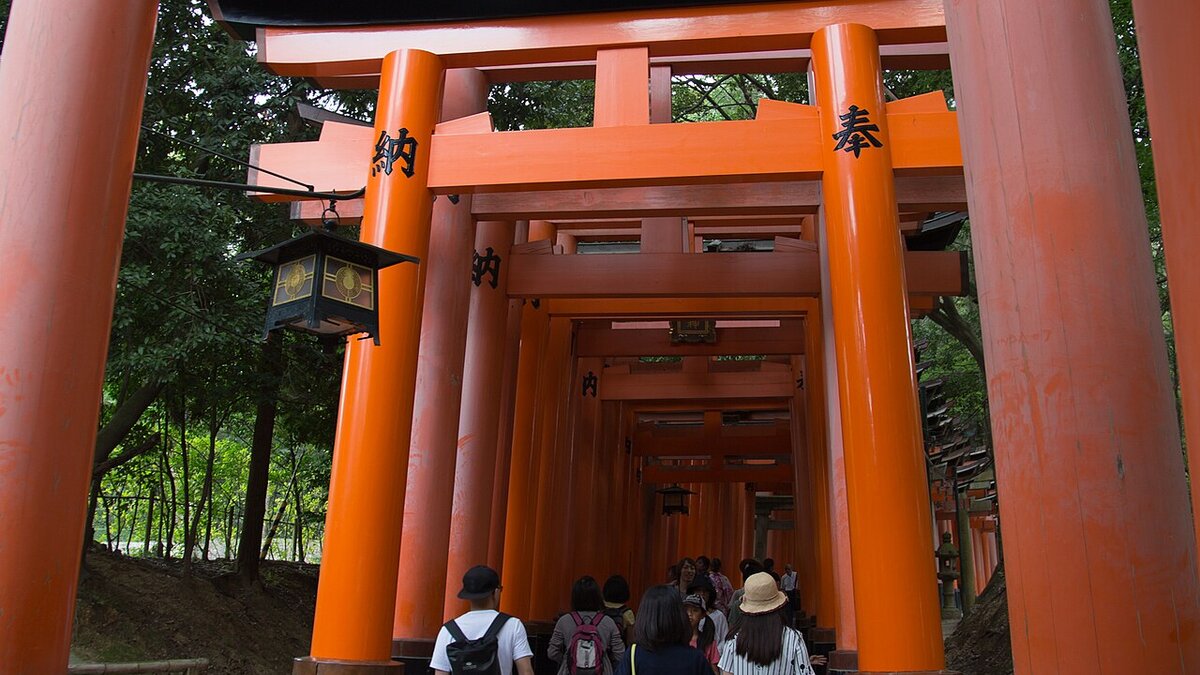
Cover image: visitors at a landmark japanese temple — photo by nobu3withfoxy from Iga,Mie, Japan, CC BY 2.0, via Wikimedia Commons.
Japan's inbound tourism machine is still breaking records in 2026, even with its largest source market largely staying home. The Japan National Tourism Organization (JNTO) counted 10,683,500 international arrivals in the first quarter of 2026, up 1.4% year on year and the first time the January-to-March period has exceeded 10 million. March alone brought 3,618,900 visitors, a record for the month, despite Chinese arrivals plunging 55.9% to 291,600 amid a diplomatic standoff with Beijing. By the end of May the running total stood at roughly 17.9 million. The backdrop is a yen trading near ¥162 to the US dollar, close to 40-year lows, which has made Japan one of the world's best-value major destinations. The boom now comes with a price tag: the national departure tax tripled to ¥3,000 on 1 July 2026, Kyoto's accommodation tax rose as high as ¥10,000 a night in March, and visa fees jumped roughly fivefold this month.
How many tourists has Japan welcomed in 2026 so far?
After a record 42.7 million foreign visitors in 2025, itself a 15.8% jump on 2024's previous high of 36.9 million, JNTO's 2026 monthly data shows a market that is still enormous but no longer growing in a straight line. The record first quarter gave way to year-on-year dips in April (3,692,200 arrivals, down 5.5%) and May (3,559,900, down 3.6%), declines driven almost entirely by the Chinese slump.
| Period (2026) | Arrivals | Change vs 2025 |
|---|---|---|
| January | 3,597,500 | Slightly lower, on the China freeze |
| March | 3,618,900 | +3.5% (record for March) |
| Q1 total | 10,683,500 | +1.4% (record first quarter) |
| April | 3,692,200 | -5.5% |
| May | 3,559,900 | -3.6% |
Beneath the headline dips, JNTO reported that 19 source markets set all-time May records, led by the Middle East (up 67.8%), Malaysia (up 39.6%), India (up 31.3%) and Mexico (up 30.6%), while South Korea and Taiwan grew 15.2% and 14.6% respectively. Japan's resilience mirrors the wider pattern in a year when global tourism is tracking towards a record 1.58 billion international arrivals.
Why did Chinese arrivals to Japan collapse?
China was Japan's second-largest market in 2025 with 9.1 million visitors, accounting for roughly a fifth of arrivals and, per the South China Morning Post, nearly a third of tourism spending. That flow froze after Prime Minister Sanae Takaichi's November 2025 remarks on a hypothetical Taiwan contingency prompted Beijing to issue a travel advisory against Japan, alongside flight cuts and other retaliatory measures.
The impact was immediate: Chinese arrivals fell about 45% year on year in December 2025 and around 61% in January 2026, and were still down 55.9% in March. Yet JNTO's May figures show other markets adding 343,000 visitors between them, up 11.8%, and offsetting 72% of the Chinese shortfall. The episode has, if anything, accelerated Japan's diversification towards South Korea, Taiwan, Southeast Asia, India, the Gulf and the Americas.
How much is the weak yen boosting Japan travel?
The yen has traded near ¥162 to the US dollar in early July 2026, down around 10% over the past year and close to 40-year lows, despite intervention talk from Finance Minister Satsuki Katayama. For inbound visitors, hotels, rail passes and dining cost dramatically less in dollar, euro or won terms than a decade ago.
The spending numbers reflect it. Foreign visitors spent a record ¥9.5 trillion in Japan in 2025, JNTO data shows, and the government is targeting 60 million visitors and ¥15 trillion in spending by 2030. Currency weakness cuts both ways for the trade, however: outbound Japanese travel remains subdued, and inbound operators face rising imported costs, a squeeze familiar to airlines contending with elevated jet fuel prices in 2026.
What is Japan doing about overtourism in 2026?
Japan's answer increasingly looks like Europe's: price the crowds. As Barcelona doubles its tourist tax amid Europe's overtourism backlash, Japanese authorities have rolled out their own ladder of levies through 2026:
- Kyoto's accommodation tax, in force since 1 March 2026, now runs on a five-tier scale that peaks at ¥10,000 per person, per night for luxury stays, a tenfold rise on the previous cap and Japan's highest hotel tax.
- The national International Tourist Tax (departure tax) tripled from ¥1,000 to ¥3,000 on 1 July 2026, The Japan Times reported. Collected within the air or sea fare (tickets issued before 1 July keep the old rate), it is forecast to raise ¥130 billion in fiscal 2026, earmarked partly for overtourism countermeasures.
- Visa fees rose roughly fivefold from July 2026, the first increase in almost five decades, as covered in our report on Japan quintupling its visa fees. Most Western and many Asian visitors travel visa-free, so the change mainly affects markets such as China, India and Vietnam.
Officials frame the package as a pivot to managed, higher-value tourism, with proceeds funding crowd control, multilingual infrastructure and regional dispersal rather than deterring visitors outright.
What does Japan's tourism surge mean for the travel trade?
For tour operators and airlines, the message is that Japan demand remains structurally strong but is rebalancing. Capacity once aimed at mainland China is being redeployed to Seoul, Taipei and Southeast Asia, and record growth from India, the Gulf and Latin America points to where the next distribution deals will be won. Regional Japan, still far below its capacity, is the explicit target of the new tax revenue.
Pricing will also shift: a family of four now pays ¥12,000 in departure tax alone. Such sums remain small against the weak-yen savings — precisely why the government believes demand can absorb them.
Frequently asked questions
Is Japan on track for another record tourism year in 2026?
The first quarter of 2026 was the strongest on record at 10.68 million arrivals, but April and May came in slightly below 2025 levels because of the Chinese travel freeze. Whether 2026 beats 2025's 42.7 million total now hinges largely on if and when Beijing lifts its advisory.
How much is Japan's tourist tax in 2026?
Every departing passenger now pays a ¥3,000 International Tourist Tax, tripled from ¥1,000 on 1 July 2026 and built into the ticket price. On top of that, local accommodation taxes apply in many cities, with Kyoto's new levy ranging up to ¥10,000 per person, per night at the luxury end.
Do most tourists need to pay Japan's higher visa fees?
No. Citizens of around 70 countries and territories, including the UK, EU states, the US and Australia, enter Japan visa-free for short stays. The July 2026 fee increase mainly affects visa-required markets such as China, India, Vietnam and the Philippines.
Why is Japan so cheap for foreign visitors right now?
The yen has been trading near ¥162 to the US dollar, close to 40-year lows, making accommodation, food and transport significantly cheaper in most foreign currencies. Tokyo has signalled possible intervention, so the discount may not last.
Sources
- JNTO — Japan tourism statistics: trends in visitor arrivals
- Travel Voice — International arrivals in Japan exceeded 10 million in the first three months of 2026
- The Japan Times — Japan triples departure tax in push to combat overtourism
- South China Morning Post — Kyoto approves higher lodging tax from March 2026 to curb overtourism





Post a comment