

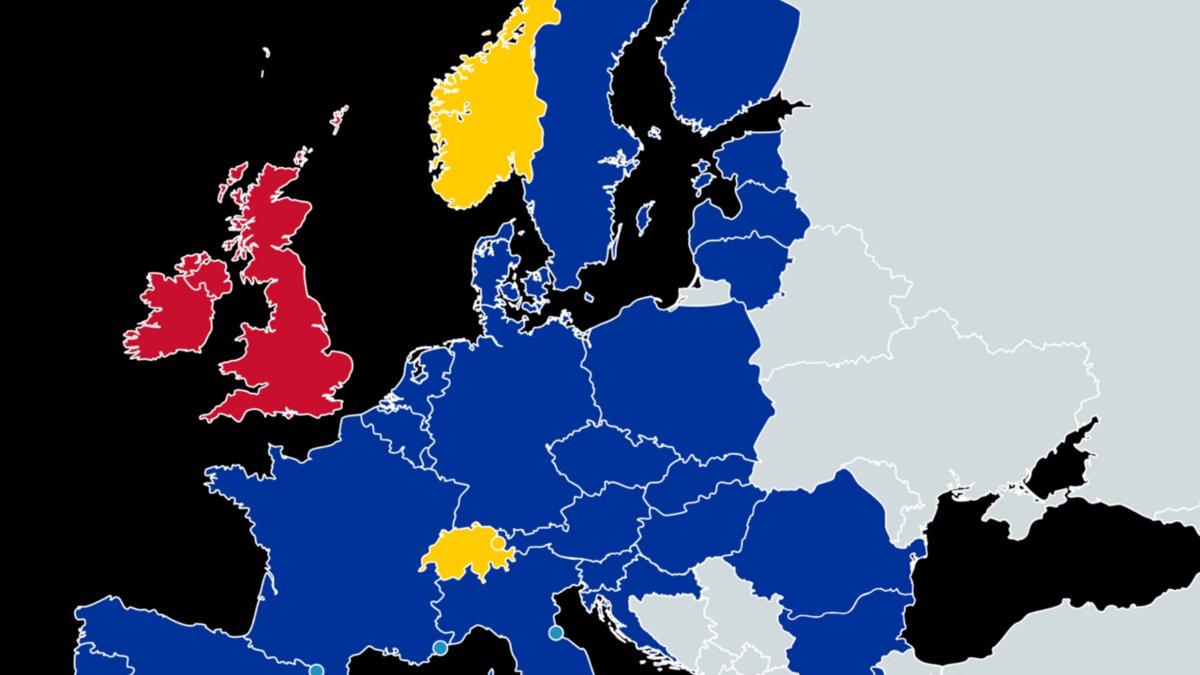
Schengen visa travel insurance starts at about €22 for a one-week trip — the EU only requires €30,000 in medical cover, so the cheapest compliant plan is enough for the visa. Full price breakdown inside.
Cover image: a map of Europe highlighting the Schengen Area member states — photo by ZElsb, CC BY 4.0, via Wikimedia Commons.
Schengen visa travel insurance costs from about €20–35 for a one-week trip. The EU's requirement is a floor, not a luxury spec: your policy must provide at least €30,000 in medical expenses and repatriation cover, be valid in every Schengen country, and last your entire stay — and the cheapest plans built to that spec start at roughly €4.90 per day, which works out to about €22 for a 5–8 day trip on AXA's entry-level plan. Anything above that floor is optional comfort, and for the visa itself you don't need it.
Because the insurance certificate is a mandatory document in your application file (alongside the rest of the paperwork in our Schengen visa guide), this is one purchase where "cheapest compliant" is a genuinely defensible strategy. Here is what the market actually charges, and where the money is worth spending.
The requirements your policy must meet
Consulates check four things on the certificate you submit:
- Minimum €30,000 cover for medical emergencies, hospitalization and repatriation (including in case of death);
- Validity across all Schengen member states, not just the one issuing your visa;
- Coverage for your entire stay, as printed on your itinerary;
- An insurer accepted by the consulates of the Schengen countries.
A policy that meets those four points is acceptable for the visa. Everything else — baggage, cancellation, higher medical caps — is for your own benefit and priced separately.
What Schengen travel insurance actually costs: a price table
AXA — one of the largest dedicated Schengen providers, with plans accepted by all Schengen embassies and consulates — publishes its full price ladder openly. It is representative of the dedicated visa-insurance market (Europe Assistance, Mutuaide and Allianz-tier competitors price similarly):
| Plan | 1–2 days | 5–8 days | 105–180 days | Medical cover |
|---|---|---|---|---|
| Basic | €4.90/day | €22 total | €189 total | €30,000 (top-up to €50,000) |
| Essential | €8.90/day | €33 total | €298 total | €50,000 (top-up to €250,000) |
| Premium | €23.90/day | €54.90 total | €439.90 total | €2,000,000 |
| Annual (multi-trip) | €349.90/year, unlimited trips of up to 90 days | €100,000 (top-up to €2m) | ||
Prices per AXA's published Schengen pricing page, checked August 2026. Two patterns matter more than the brand:
- The per-day cost collapses with trip length. Basic is €4.90/day for a weekend but works out near €1.05/day across a 105–180 day policy. A two-week applicant should expect roughly €25–40 at entry level, not 14 × €4.90.
- The medical cap is what you're paying for. Basic's €30,000 is exactly the visa minimum; Essential doubles it to €50,000; Premium multiplies it 66-fold to €2 million and adds luggage cover up to €2,000, hospital daily allowances and emergency dental.
Cheapest acceptable vs actually sensible
For the visa file, a €22 Basic-style certificate passes. For the trip itself, the honest question is whether €30,000 is enough medical cover where you're going: a private hospital stay plus possible medical evacuation in Western Europe can exceed €30,000 quickly, which is why many applicants pay the ~€10–20 more for a €50,000+ cap. If you're a frequent visitor or hold a multi-entry visa, the €349.90 annual plan covers unlimited trips of up to 90 days across the Schengen area (plus the EU, microstates and the UK) — cheaper than buying four separate certificates.
Note what visa-compliant Schengen insurance does not include: trip cancellation, lost baggage or delay cover. Those are the products we compare in what travel insurance actually covers, and they're a separate line item from your visa certificate — one reason our travel insurance vs flight insurance comparison matters if an airline or booking site has offered you a bundled policy.
Four things that move your price
- Trip length — the biggest lever by far (see the table).
- Coverage ceiling — €30k → €50k → €250k → €2m roughly doubles the premium at each meaningful step.
- Declared pre-existing conditions — insurers ask about them in the quote; declared conditions can be covered, undeclared ones will not be paid.
- Multi-entry vs single trip — if you'll visit twice in 12 months, annual pricing usually wins.
If your visa is refused, you get the premium back
Every AXA plan — and this is standard among the major Schengen specialists — is refundable if your visa is denied, provided you submit the official refusal explanation from the consulate. So the correct order of operations is: buy the certificate when you file, and don't buy cancellation-heavy extras until the visa is in your passport.
Don't need a visa? Then you don't need this product
Travelers from visa-exempt countries (UK, US, Canada, Australia and dozens of others) will travel under ETIAS, the electronic travel authorisation whose launch timeline we track in our ETIAS update — and ETIAS does not require you to buy any travel insurance. The insurance mandate attaches to the visa, not to the Schengen area. Visa-exempt travelers should still consider ordinary travel medical cover, because the European Health Insurance Card only covers EU nationals, but no consulate will ever ask you for a €30,000 certificate.
Frequently asked questions
Is travel insurance mandatory for a Schengen visa?
Yes. Every Schengen short-stay visa applicant must show insurance with at least €30,000 in medical expenses and repatriation cover, valid in all Schengen countries, for the entire duration of the stay, from an insurer accepted by the consulates.
What is the cheapest Schengen-compliant travel insurance?
Entry-level visa-compliant plans start around €4.90 per day — roughly €22 total for a 5–8 day trip on AXA's Basic plan. Longer trips cost far less per day: the same product runs €189 for 105–180 days of coverage.
Do I need Schengen visa insurance if I don't need a visa?
No. Visa-exempt travelers — including those who will need an ETIAS authorisation — are not required to hold travel insurance to enter the Schengen area. Insurance is a visa requirement, not an entry requirement for visa-exempt nationals.
Does Schengen visa insurance cover pre-existing conditions?
Insurers such as AXA ask you to declare pre-existing conditions during the quote process and can cover declared conditions; claims relating to undeclared conditions are not covered. Always declare rather than assume.
Do I get my money back if my Schengen visa is refused?
Most major Schengen insurance providers refund the premium on refusal — AXA, for example, refunds all its plans when you provide the official refusal explanation from the consulate. Keep the refusal letter.
Sources
- AXA Schengen — How much does Schengen travel insurance cost? (plan pricing and visa requirements, accessed August 24, 2026)
- EU Visa Code (Regulation (EC) No 810/2009), Art. 15 — short-stay visa insurance requirement (€30,000 medical/repatriation, territorial validity, duration of stay)






Post a comment