

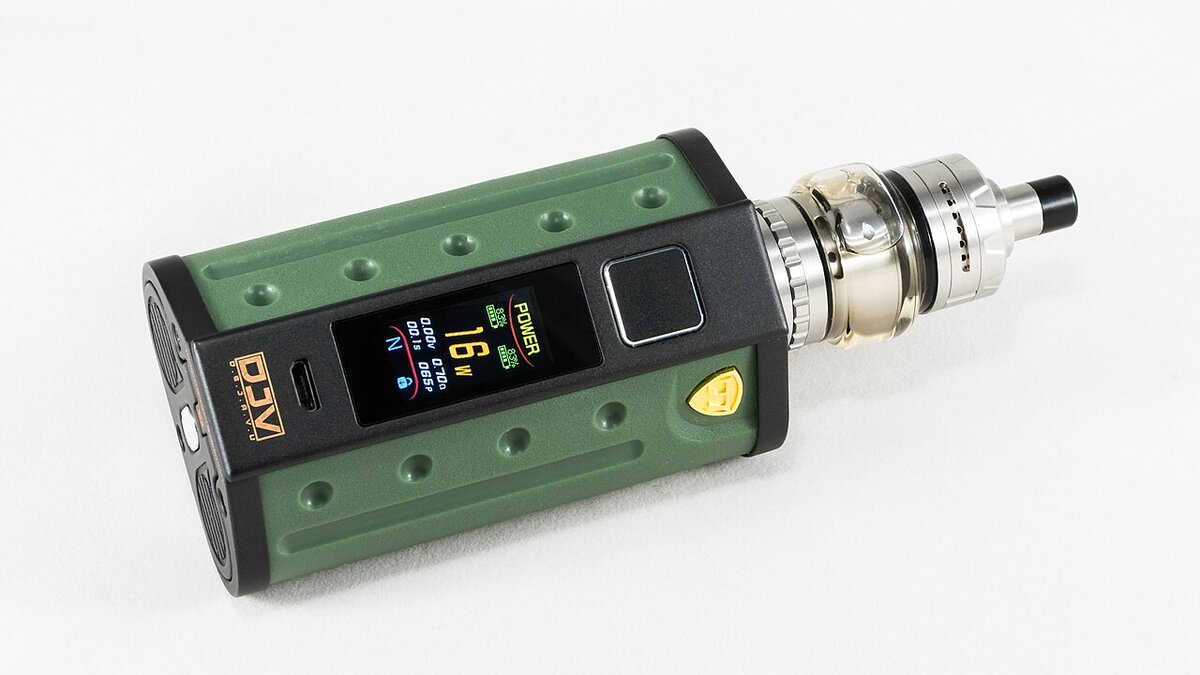
Yes, you can bring a vape on a plane — but only in your carry-on, never in checked luggage. The bigger risk is your destination: several countries confiscate vapes on arrival and fine travellers heavily.
Cover image: Close-up of a modern vape device and e-cigarette pod lying on a neutral grey background — photo by Jacek Halicki, CC BY-SA 4.0, via Wikimedia Commons.
Can you bring a vape on a plane? Yes — but only in your carry-on bag or on your person, never in checked luggage. The US Federal Aviation Administration classifies e-cigarettes and vaping devices as lithium-battery hazards, and the same rule applies worldwide under ICAO dangerous-goods standards. The device must be switched off completely, ideally in a protective case so the heating element cannot activate in your bag, and spare batteries must also travel in the cabin with their terminals protected. E-liquids follow the standard security liquids rule: containers of 100ml or less inside your clear resealable bag, with larger bottles going in the hold. Using or charging a vape on board is banned by every airline, and in the United States the FAA treats vaping as smoking, with typical civil penalties of $2,000 to $4,000 for a single onboard violation. So far, so simple. The part most vape-shop blogs skip is what happens when you land: as of August 2026, a growing list of destinations — Thailand, Singapore, Hong Kong, Mexico and others — will confiscate your device at the border, fine you, or worse.
Can you take a vape in checked luggage?
No. The FAA's lithium-battery rules — the same logic that applies to power banks — prohibit e-cigarettes, vape pens and all spare lithium batteries from checked baggage because a battery fire in the hold cannot be reached by the crew. This applies to disposables too: every disposable vape contains a lithium cell and counts as a battery-powered device.
Watch the gate-check trap. If your cabin bag is taken from you at the gate on a full flight, you are required to remove vapes, spare batteries and power banks before handing it over. If a checked vape is discovered at screening, your bag can be pulled, searched and delayed — and on some carriers you may be denied boarding until it is removed.
How many vapes and batteries can you bring?
Under FAA PackSafe rules, each lithium-ion battery must not exceed 100 watt-hours — a ceiling no consumer vape approaches — and devices should be protected against accidental activation. Spare batteries and pods go in carry-on only, each battery in its own case or plastic bag to prevent short circuits. Most airlines allow a "reasonable quantity for personal use"; several cap spare batteries at around 20 per passenger, so check your carrier's dangerous-goods page alongside its baggage allowance rules before flying with a large kit.
Can you vape on a plane?
No — on any airline, anywhere. Vaping on board is treated as smoking, and charging a vape from a seat power outlet is also prohibited because a charging lithium cell in a pressurised cabin is a fire risk. In the US the FAA warned travellers again in 2025 that onboard vaping draws fines of $2,000–$4,000, rising far higher where an incident escalates into an unruly-passenger case. Expect the same posture from UK, EU and Gulf regulators: diversion costs and airline bans are routinely passed on to offenders.
Which countries ban vapes?
This is where travellers get hurt. Airport security in your departure country waving the device through says nothing about the law where you land. Verified status as of August 2026:
- Thailand: vapes remain illegal despite periodic talk in parliament of regulating them. A police crackdown ordered in early 2025 is still running; tourists face on-the-spot fines of up to 30,000 baht (about US$900), confiscation and, in theory, jail.
- Singapore: import and possession are banned. From 1 May 2026, the renamed Tobacco and Vaporisers Control Act raised the user fine to S$10,000, with mandatory jail of up to nine years for importers. The ban catches transit passengers too.
- Hong Kong: from 30 April 2026, carrying a vape in public — including by tourists — draws a fixed HK$3,000 penalty, rising to HK$50,000 and six months' jail for larger quantities.
- Mexico: a General Health Law reform in force since 16 January 2026 imposes an absolute ban on importing vapes, with no personal-use or medical exemption.
- Australia: pharmacy-only model. A traveller's exemption allows up to 2 vapes, 20 pods and 200ml of liquid in accompanied baggage for personal therapeutic use — posting vapes to yourself is prohibited.
- India, Qatar, Brazil, Taiwan: import bans with routine airport confiscation; Qatar fines run to roughly QAR 10,000, and Brazil's customs regularly seize devices.
| Destination | Vape status (Aug 2026) | Traveller risk |
|---|---|---|
| Thailand | Illegal — active crackdown | Fines to 30,000 baht, confiscation, possible arrest |
| Singapore | Banned; tougher law from 1 May 2026 | Fines to S$10,000; importers face jail |
| Hong Kong | Public possession banned from 30 Apr 2026 | HK$3,000 fixed penalty; up to HK$50,000 + jail |
| Mexico | Import ban since 16 Jan 2026 | Confiscation; no personal exemption |
| India | Import/sale banned since 2019 | Confiscation at customs, fines |
| Qatar | Complete ban | Confiscation; fines to ~QAR 10,000 |
| Brazil | Sale/import banned | Routine customs confiscation |
| Taiwan | Banned since 2023 | Confiscation and fines |
| Australia | Pharmacy model; traveller exemption | Low, within 2-device/200ml limits |
Note that airport duty-free is no workaround — banned goods stay banned regardless of where you bought them, a distinction worth understanding before relying on how duty-free shopping works.
Frequently asked questions
Can you bring a disposable vape on a plane?
Yes, in carry-on only. Disposables contain non-removable lithium batteries, so the checked-baggage ban applies to them exactly as it does to refillable mods. Keep them switched off (or in packaging) and protected from crushing.
How many vapes can you take on a plane?
Airlines allow a reasonable personal quantity, and each battery must stay under 100Wh. But destination law is the real cap: Australia admits only two devices per traveller, and in Thailand or Singapore even one is an offence.
Are nicotine pouches like Zyn allowed on planes?
Yes — pouches contain no battery or liquid, so they can go in carry-on or checked bags. Check destination law separately: some countries that ban vapes also restrict oral nicotine products.
What happens if a vape is found in your checked bag?
Security can pull the bag, remove the device and delay your luggage; repeat or deliberate violations can draw civil penalties. If you realise before departure, tell the airline and move the vape to your carry-on.
Sources
- FAA PackSafe — Airline Passengers and Batteries
- FAA — Vapes on a Plane?
- TSA — Electronic Cigarettes and Vaping Devices
- Health Sciences Authority Singapore — Vaping Enforcement
- Therapeutic Goods Administration (Australia) — Vapes: Information for Individuals
- Hong Kong Free Press — Fines and Jail for Carrying Vapes in Public


Post a comment