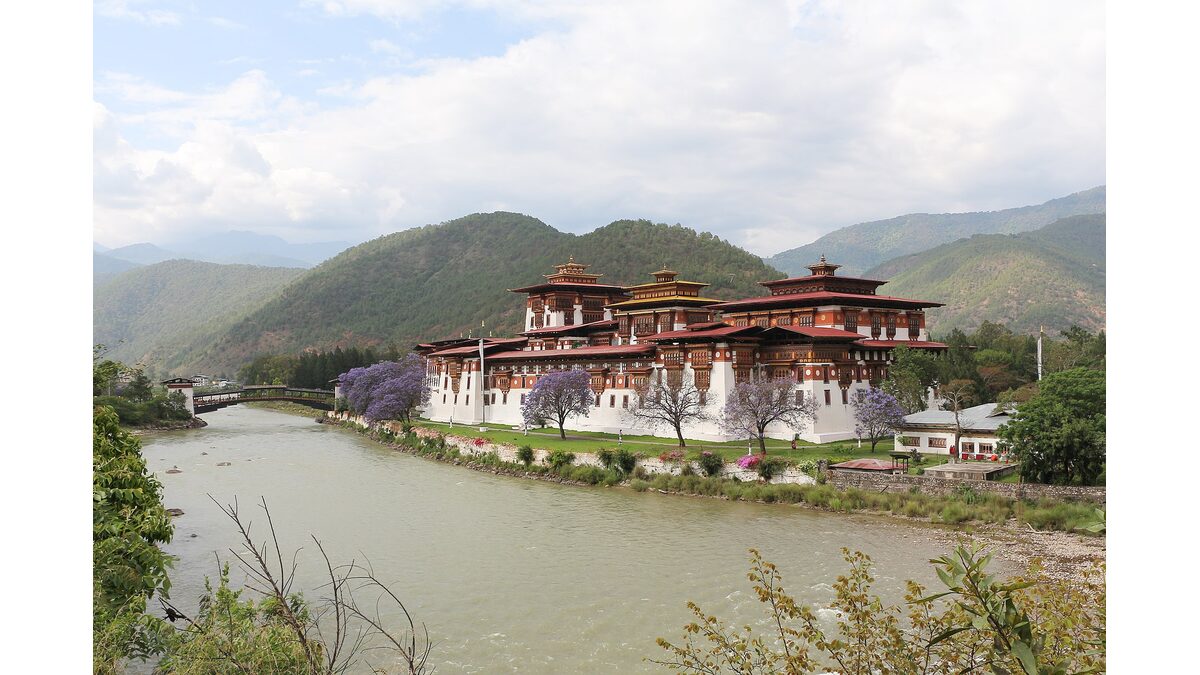
Best time to visit Bhutan from India is October-November (clear views, Thimphu Tshechu), then March-April (blooms, Paro Tshechu). Monsoon June-September is best avoided.
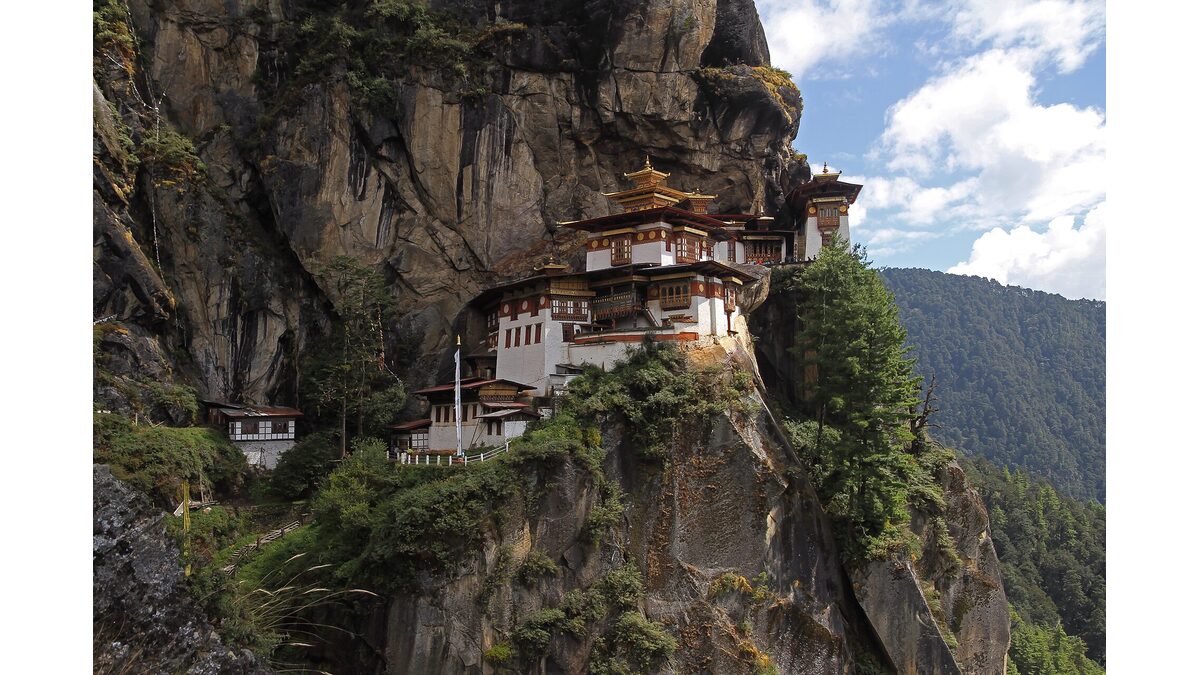
Cover image: Tiger's Nest monastery clinging to a cliff above the Paro valley in Bhutan — photo by Gerd Eichmann, CC BY-SA 4.0, via Wikimedia Commons.
The best time to visit Bhutan from India is October to November, with March to April as the second-best window. Autumn brings clear mountain views, daytime highs around 20-24°C in the Paro and Thimphu valleys, and the famous Thimphu Tshechu festival (held in September or October). Spring offers rhododendron blooms, the Paro Tshechu festival and pleasant 19-22°C days. Avoid the June-to-September monsoon, when rain clouds hide the Himalayas and landslides can block mountain roads.
Indians do not need a visa for Bhutan but must carry a passport or voter ID, obtain an entry permit, and pay a Sustainable Development Fee of ₹1,200 per person per night. Our Bhutan visa guide for Indians covers the paperwork; this guide covers when to go.
Bhutan month-by-month weather for Indian travellers
| Season | Months | Thimphu highs / lows | Verdict |
|---|---|---|---|
| Spring | Mar-Apr | 19-22°C / 4-8°C | Excellent: blooms, festivals, clear views |
| Early summer | May | ~25°C / ~12°C | Good: warm valleys, building clouds |
| Monsoon | Jun-Sep | 26-27°C / 15-17°C | Avoid: rain, leeches on trails, roadblocks |
| Autumn peak | Oct-Nov | 20-24°C / 3-9°C | Best: crisp skies, festivals, harvest |
| Winter | Dec-Feb | 15-17°C / -2-0°C | Mixed: clear views, freezing nights, snow |
Temperature figures are long-run normals for the Thimphu valley (Simtokha station, 2,310 m), the climate reference most itineraries use. Higher valleys such as Phobjikha and Bumthang run several degrees colder, and passes can hold snow from December into February.
October-November: why autumn wins
Post-monsoon air is the clearest of the year, which matters because Bhutan sells views: Tiger's Nest against blue sky, the Dochula pass with the eastern Himalaya lined up behind 108 chortens, Jomolhari on a lucky morning. Days sit at a comfortable 20-24°C for walking Paro and Thimphu, while nights drop to 3-9°C, so one warm layer is essential.
October is also festival season. The Thimphu Tshechu, the kingdom's biggest masked-dance festival, falls in September or October by the Bhutanese calendar and draws domestic and foreign crowds. Hotel rates in Paro and Thimphu peak in October, so families travelling with school-age children should book rooms six to eight weeks ahead. Travellers pairing two Himalayan kingdoms often ask about the neighbour too; our Nepal entry guide for Indians covers permits and ID rules there.
March-April: spring festivals and flowers
Spring is the connoisseur's pick. Daytime highs of 19-22°C, valleys flushing green, and rhododendron forests in full flower along the Dochula and Chele La roads. The Paro Tshechu falls in spring and is arguably the most photogenic festival in the country, with the unfurling of the giant thongdrel tapestry as its centrepiece.
Rainfall is still modest in March, though April showers build toward the monsoon (the southwest monsoon runs roughly mid-April to September). Visibility is slightly hazier than October, but crowds are thinner and hotel rates 15-25% below autumn peak. For Indian families escaping the plains' heat, late March aligns well with school spring breaks.
When not to go: monsoon and deep winter
June through September brings the southwest monsoon. Thimphu still averages 26-27°C by day, but the mountains vanish behind cloud for days at a stretch, trails turn leech-infested, and landslides periodically close the Paro-Thimphu-Punakha highway. The one compensation is lush scenery and the lowest hotel rates of the year.
December to February suits travellers who prioritise clear views over comfort. Skies are often brilliant, daytime highs of 15-17°C are walkable in sun, but nights fall below freezing and many high passes close. The black-necked cranes arrive in Phobjikha valley in late October and stay through winter, so birdwatchers deliberately choose this season. Flight schedules to Paro, one of the world's trickiest visual approaches, suffer the most weather delays in mid-winter; Air India's Drukair interline deal has at least made single-ticket bookings from Indian cities easier.
Frequently asked questions
Which is the best month to visit Bhutan from India?
October. Skies are clearest after the monsoon, temperatures sit at 20-24°C by day, and the Thimphu Tshechu festival usually falls around this time. November is nearly as good with fewer crowds.
Is March a good time to visit Bhutan?
Yes. March brings 19°C days, rhododendron blooms and the Paro Tshechu spring festival, with hotel rates below the October peak. Early March nights still drop near freezing.
Can Indians visit Bhutan in summer?
You can, but June to September is monsoon season: mountain views disappear behind cloud and landslides can disrupt road travel. It is the cheapest season, so consider it only for a culture-focused trip to Thimphu and Paro town.
How many days are enough for Bhutan from India?
Five to six days covers Paro (including Tiger's Nest), Thimphu and Punakha at a comfortable pace. Add two days for Phobjikha or Bumthang if travelling in the October-November window.