

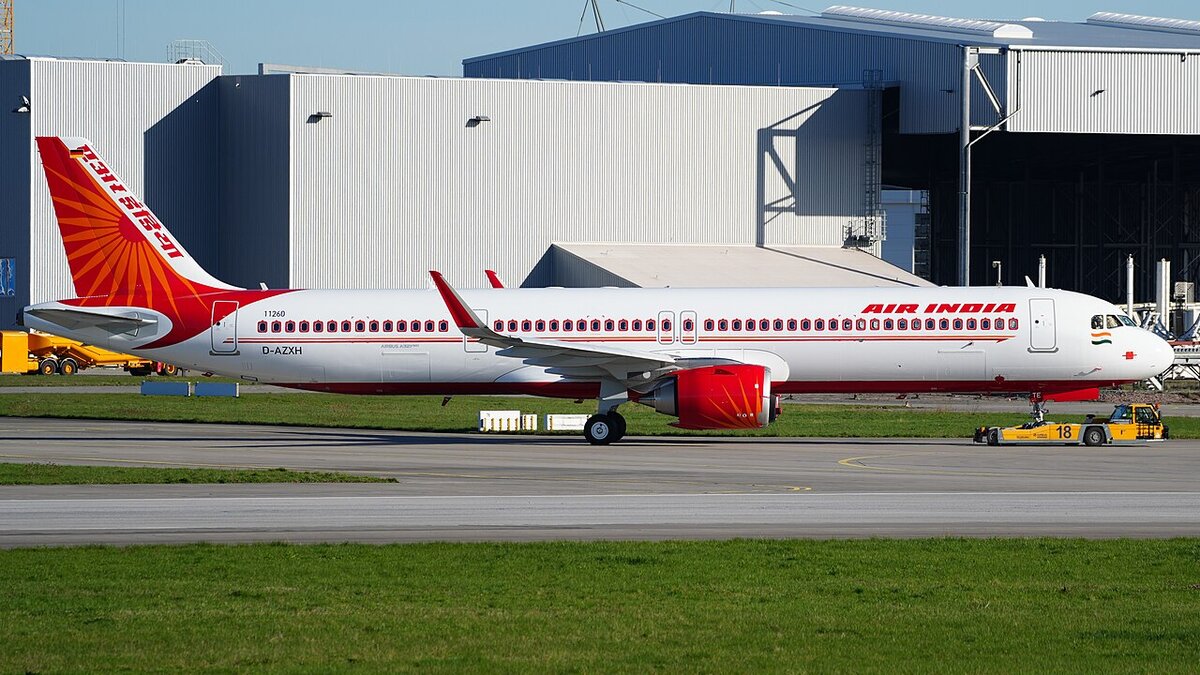
Air India flight AI2379 from Phuket to Delhi dropped roughly 300 feet in a sudden turbulence event on 4 August, injuring at least 12 people on board, including a cabin crew member who was hospitalised. The DGCA is investigating; Air India says a transient technical fault is suspected.
Cover image: an Air India Airbus A321neo, the aircraft type Air India uses on Thailand routes — photo by MarcelX42, CC BY-SA 4.0, via Wikimedia Commons.
At least 12 people were injured when Air India flight AI2379 from Phuket to Delhi encountered a sudden turbulence event on the morning of Tuesday 4 August 2026, dropping approximately 300 feet in altitude during cruise. The aircraft, carrying around 125 passengers, landed safely at Delhi's Indira Gandhi International Airport Terminal 3 at 11.07am, where medical teams met the flight. India's aviation regulator, the Directorate General of Civil Aviation (DGCA), has opened an investigation, and Air India has said a "transient technical fault is suspected" — an unusual early signal that this may not have been a pure weather event.
According to the pilot-in-command's report cited by The New Indian Express, 10 passengers and two cabin crew members were injured, with one cabin crew member seriously hurt and taken to hospital. Other reports put the total injured at up to 14, with most injuries described as minor. Passengers described a violent, momentary plunge; one told ANI the landing "was rebirth for all of us", and television footage showed injured travellers being taken from the terminal in wheelchairs.
What happened on flight AI2379?
The flight departed Phuket at 8.27am local time and was in cruise when the turbulence struck at around 10.30am, shortly before the aircraft entered Indian airspace, according to a DGCA source quoted in Indian media. The aircraft experienced what Air India described as "a brief in-flight turbulence-related event" involving "a momentary change in altitude" of roughly 300 feet.
The sudden loss of altitude threw unrestrained people and objects around the cabin — the pattern seen in almost every serious turbulence injury event. Cabin crew, who spend the most time out of their seats, were among the worst hurt: Air India reported a severe injury to one cabin crew member, an injury to another, and minor injuries to several passengers.
How did Air India and the DGCA respond?
Air India confirmed the aircraft landed safely and all passengers and crew disembarked normally. Passengers and crew with minor injuries were assessed at the airport's medical facility as a precaution, an airport source said, while the seriously injured crew member was moved to hospital. The DGCA probe will examine the flight-data record — including whether the altitude excursion was caused by weather, a technical malfunction, or a combination — which matters because the airline itself has flagged a suspected transient technical fault rather than attributing the event purely to rough air.
Is flight turbulence getting worse?
Serious turbulence injuries remain rare, but the trend line worries the industry. The benchmark case is Singapore Airlines flight SQ321 in May 2024, when severe turbulence over Myanmar left one passenger dead and dozens injured on a London–Singapore Boeing 777, forcing a diversion to Bangkok. Research from the University of Reading published in 2023 found that severe clear-air turbulence over the North Atlantic increased by around 55% between 1979 and 2020 as a warming atmosphere strengthens wind shear in the jet stream — and clear-air turbulence is precisely the kind that strikes without warning, when the seatbelt sign may be off.
For Air India, the incident lands during an intensive safety-scrutiny period for Indian aviation, with the DGCA taking a visibly harder line on operators. It also comes just a week after the airline signed a landmark agreement with India's tourism ministry to grow inbound travel — coverage of that deal is in our report on the Air India–Ministry of Tourism stopover partnership.
What should passengers do about turbulence?
- Keep your seatbelt fastened whenever seated — every serious turbulence event injures mainly the unbelted. This is the single intervention safety regulators repeat after every incident.
- Secure heavy items in the overhead bin rather than at your feet or on your lap.
- Listen when crew suspend service — cabin crew injuries on AI2379 show who is most exposed when the cabin is caught out.
- Check what your policy covers — injuries on board are governed by the Montreal Convention for international flights, and good travel cover helps with follow-on costs; see our guide to what travel insurance actually covers.
The Phuket–Delhi route sits on one of the busiest India–Thailand corridors, which has boomed since Thailand's visa liberalisation for Indian travellers — background in our report on Thailand's tourism surge.
Frequently asked questions
Was anyone killed on the Air India Phuket–Delhi flight?
No. Injuries were mostly minor, treated at Delhi airport's medical facility. One cabin crew member was seriously injured and taken to hospital. The aircraft landed safely with all on board disembarking normally.
What caused the turbulence on AI2379?
That is what the DGCA investigation must establish. Air India has said a "transient technical fault is suspected" alongside the turbulence-related altitude change, so investigators will look at both weather and aircraft systems before drawing conclusions.
Are passengers entitled to compensation for turbulence injuries?
On international flights, the Montreal Convention makes airlines liable for proven bodily injury caused by an accident on board, which can include turbulence injuries — particularly where the seatbelt sign was off or warnings were inadequate. Claims depend on the investigation's findings.
Is it still safe to fly through monsoon season?
Yes — turbulence injuries remain extremely rare relative to the millions of flights operated each year, and forecasting keeps improving. The practical protection is simple: stay belted whenever you are seated, regardless of the sign.

Post a comment