South Korea is safe for Indian tourists with rare violent crime — but know the DMZ situation, typhoon season, nightlife precautions and strict drug laws. 2026 safety guide.
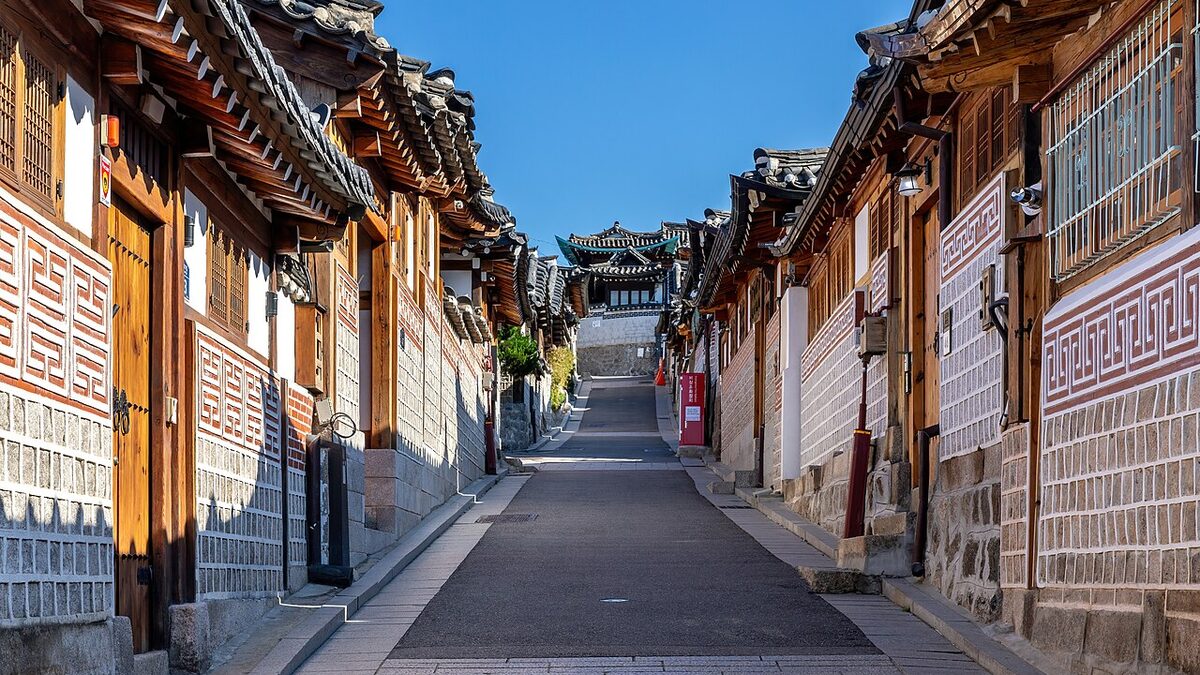
Cover image: Sunlit hanok-lined street climbing through Bukchon Hanok Village in Seoul — photo by Basile Morin, CC BY-SA 4.0, via Wikimedia Commons.
Yes, South Korea is safe for Indian tourists — violent crime against foreigners is rare, public transport is excellent, and Seoul consistently ranks among Asia's safest large cities. The cautions are specific rather than general: late-night bar districts need the usual big-city alertness, the North Korean border situation can change quickly, typhoons run June to November, and drug laws are draconian. Indians must arrange a visa before flying — a short-term C-3 tourist visa costing about US$40 (≈₹3,800) with 5–10 working days' processing, since India has no visa-free or K-ETA access, as our South Korea visa guide for Indians explains.
How safe is South Korea for Indian tourists?
Official British travel advice describes crime against foreigners as rare, limited mostly to occasional thefts in crowded and tourist-heavy districts such as Seoul's Itaewon. Most reported crime is theft; assaults, including sexual assault, concentrate around bars and nightlife, so solo travellers should be careful alone at night and use licensed taxis or public transport. Tourist complaints data tells the same story at low volume: Korea's tourism organisation logged 1,753 visitor complaints in January–July 2026 — only just above the 1,744 for all of 2025 — clustered in Seoul (665), Busan (594) and Incheon, mostly about taxis, shops, hotels and entertainment rather than safety, as we reported in South Korea's record tourist complaints. Scams targeting Indians specifically are not a documented pattern; opportunistic theft is the risk to manage.
The North Korea factor, honestly explained
South Korea lives under an armistice, not a peace treaty, and tensions can shift with little notice — typically after North Korean missile tests or during US–South Korea military exercises. In practice, daily life in Seoul continues normally through these cycles, and the official advice is simply to follow local authority guidance and exercise caution near the Demilitarised Zone, which tourists visit on tightly controlled tours anyway. Civil-defence drills with sirens occur from time to time; vehicles stop and people may be directed into metro stations and basements. There is no recent history of terrorism in South Korea, though attacks anywhere cannot be ruled out. None of this should deter a trip — it should sit in the same mental drawer as checking the weather.
Natural risks, roads and laws to know
Typhoon season runs June to November, and heavy summer rain in June and July can cause river flooding, flash floods and landslides in hilly areas — monitor the Korea Meteorological Administration during the monsoon months. Strong earthquakes are unusual but do occur, and forest-fire alerts arrive on phones in Korean with English translations on the national disaster portal and Emergency Ready app. On the roads, police treat drivers as at fault when cyclists or pedestrians are injured, the drink-drive limit is less than half England's, and taxi drivers often speak little English, so keep your destination written in Korean. Carry ID at all times — it is a legal requirement. Drug possession, use or trafficking draws long jail sentences and heavy fines even for small amounts of marijuana. Foreign nationals may not take part in political activities or demonstrations.
| Risk area | What to do | When it matters |
|---|---|---|
| Theft in crowds | Guard passport and cards in Itaewon, markets, metro | Always, esp. late night |
| Nightlife assault | Stay with company, licensed taxi or metro home | Bar districts after dark |
| DMZ and tensions | Follow official guidance; DMZ by organised tour only | After missile tests or drills |
| Typhoons and floods | Check forecasts; avoid hillsides and rivers in storms | June to November |
| Roads | Do not drive after drinking; destination in Korean | Any taxi or self-drive trip |
| Law traps | No drugs, no demonstrations, carry ID | Entire trip |
Frequently asked questions
Is South Korea safe for Indian women?
Yes, with normal big-city precautions. Violent crime is rare, but take care alone late at night around bar districts and use licensed taxis or public transport.
Is it safe to visit the DMZ?
Yes, on official organised tours, which run under tight controls. Check current guidance before booking, as access rules shift with inter-Korean tensions.
When is typhoon season in South Korea?
June to November, with heavy rain risks concentrated in June and July. Monitor local forecasts if travelling in these months.
Do Indians face racism in South Korea?
Korea's visitor-complaint data centres on service issues — taxis, shops, hotels — not targeted crime against Indians. Standard tourist vigilance is sufficient.