The all-inclusive wristband covers far less than many guests assume, and the business model depends on it. Here is what is genuinely bundled, what gets upsold, how tipping works, and why Hyatt and Marriott are betting billions on the segment.
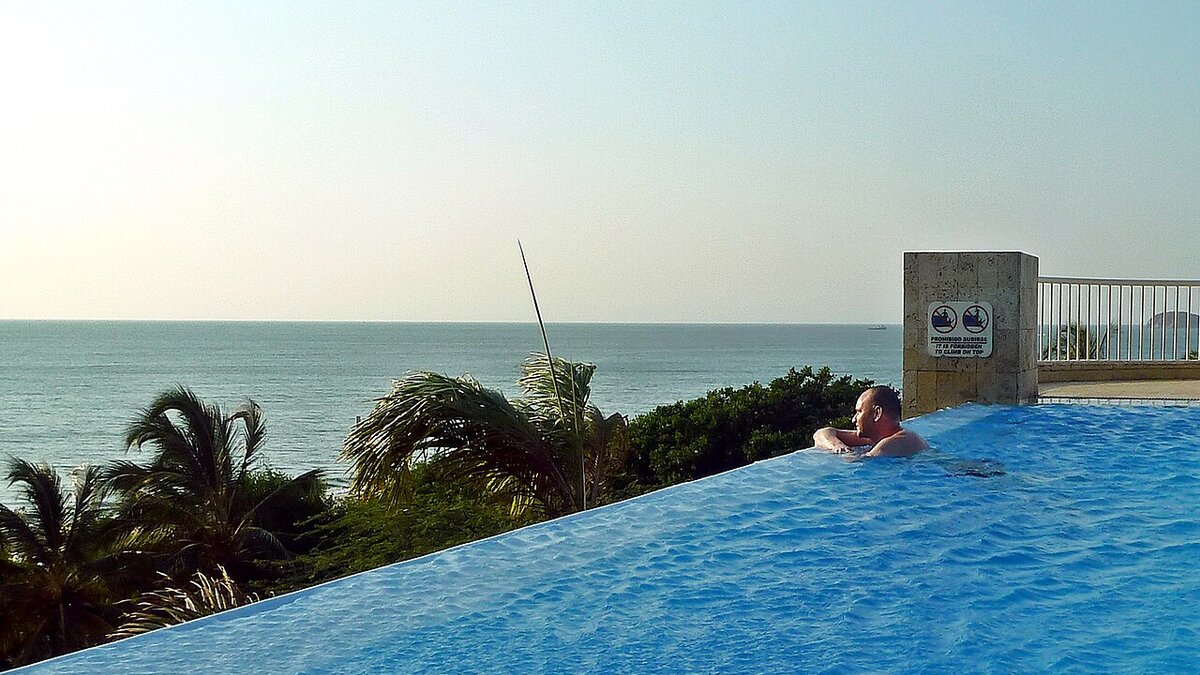
Cover image: pool deck of an all-inclusive resort — photo by David Shankbone, CC BY 3.0, via Wikimedia Commons.
An all-inclusive resort bundles the room, unlimited buffet and à-la-carte dining, house-brand drinks, non-motorised water sports, nightly entertainment, kids' clubs and, at most properties, gratuities into a single prepaid rate. What it usually does not include: premium spirits, speciality-restaurant surcharges, spa treatments, motorised water sports, off-property excursions and airport transfers, extras that can add hundreds of dollars to a week's stay. The term "all-inclusive" is not regulated, so every operator defines it differently, and the fine print is where the model earns its margin. The segment is booming: market-research firm Dataintelo values the global all-inclusive resort market at $67.4 billion in 2025, projected to reach $134.8 billion by 2034, and a Skift survey commissioned by Hyatt's Inclusive Collection found that 87% of consumers have stayed at, or considered, an all-inclusive. That demand explains why Hyatt Hotels Corporation paid roughly $2.6 billion for Playa Hotels & Resorts in June 2025, and why Marriott International is rolling out W and JW Marriott all-inclusives.
What is actually included at an all-inclusive resort?
The reliable core of almost every package is accommodation, three buffet meals a day, snacks, house-pour alcohol, soft drinks, pool and beach access, non-motorised water sports such as kayaks and paddleboards, evening shows and supervised kids' clubs at family properties. At upscale brands, a rotation of à-la-carte restaurants is included, sometimes with reservation limits per stay.
Beyond that core, inclusions diverge sharply by brand tier. Luxury operators such as Sandals Resorts International fold in premium spirits, scuba diving for certified divers and gratuities; mass-market properties keep the base rate low and monetise everything above the buffet line. The same paid extras recur across the sector:
- Speciality dining: chef's-table or premium restaurants commonly carry per-person surcharges of roughly $30–80.
- Premium alcohol: top-shelf spirits and champagne are typically excluded or served only at upcharge bars.
- Spa and wellness: treatments generally run $100–300 per session, spa access is almost never in the package.
- Motorised water sports, excursions and transfers: jet skis, catamaran trips and airport shuttles are usually billed separately.
- Cabanas, Wi-Fi upgrades and photography: classic on-property upsells with very high margins.
| Category | Usually included | Usually extra |
|---|---|---|
| Food | Buffets, snacks, standard à-la-carte venues | Chef's-table dinners, lobster/steak supplements, room-service at budget tiers |
| Drinks | House spirits, local beer, house wine, soft drinks | Premium and top-shelf brands, champagne, bottled wine lists |
| Activities | Pools, non-motorised water sports, entertainment, kids' clubs | Motorised water sports, golf, excursions, spa |
| Logistics | Resort-wide Wi-Fi (most upscale brands) | Airport transfers, premium Wi-Fi, early check-in |
| Service | Gratuities at most upscale brands | Butler tips, spa gratuities, transfer-driver tips |
How do all-inclusive resorts make money?
The economics behind the wristband rest on three pillars. First, prepaid, largely non-refundable revenue: the resort banks the money weeks or months before arrival, smoothing cash flow and sharpening food-and-beverage procurement forecasts. Second, consumption averaging: guests who drink cocktails all day are subsidised by children, light drinkers and travellers who skip meals; buffet-led service and house-brand pours keep incremental meal costs low. Third, and increasingly most important, on-property upsell: spa, premium dining, excursions, room-category upgrades and romantic dinners on the beach are sold to a captive audience that has already mentally "paid for everything".
Property advisory firm JLL notes that all-inclusives in Mexico and the Dominican Republic recovered faster than conventional European Plan hotels after the pandemic, helped by longer booking windows — exactly the demand predictability revenue managers prize. It is a very different machine from the dynamic-rate game described in our guide to how hotel room pricing works, but the goal is the same: capture the maximum share of each guest's holiday wallet.
Do you tip at an all-inclusive resort?
It depends on the brand's stated policy, and it is worth reading before you fly. At Sandals and Beaches resorts, gratuities are built into the package and staff are prohibited from accepting tips; employees must hand in any cash they receive. The exceptions are butlers, spa therapists and transfer drivers, and travel advisers who sell the brand commonly suggest around $50–100 per day for butler service.
At most Mexican and Dominican all-inclusives, by contrast, tipping is technically covered but culturally expected: a dollar or two per drink round, $5–10 for housekeeping and waiters, paid in small bills. The practical rule is simple: if the resort explicitly bans tipping, respect it; otherwise budget a modest daily cash float, because service staff wages in the region assume it.
When does all-inclusive beat booking à la carte?
All-inclusive wins when consumption is high and predictable: families with teenagers, groups who drink socially, and beach-focused trips where guests rarely leave the property. It also wins on budgeting certainty: one prepaid number instead of a fluctuating food-and-drink bill. Destination matters too: in the Caribbean, where off-resort dining options can be limited and 2026's below-normal hurricane forecast is supporting strong demand, the model is at its most competitive.
À la carte wins for travellers who explore: if you plan to eat out, tour and spend days away from the pool, you are paying for meals and drinks you never consume. City trips, road trips and food-led destinations rarely justify the premium. Timing also moves the maths: shoulder-season dates can cut package prices sharply for identical inclusions.
Why are luxury hotel brands going all-inclusive?
Because the fee streams are long and the demand is proven. After buying Playa, Hyatt sold the entire 15-resort owned portfolio to Tortuga Resorts for $2.0 billion on 30 December 2025, while signing 50-year management agreements on 13 properties, keeping the brands and fees without the real-estate risk. Hyatt's Inclusive Collection is now the anchor of its Latin America growth, with the first-ever all-inclusive Park Hyatt (Riviera Maya) and Grand Hyatt (Los Cabos) slated to open in 2026.
Marriott opened its first W-branded all-inclusive in the Dominican Republic in 2025, with a JW Marriott all-inclusive in Costa Rica expected to follow in 2026. The luxury wave reframes the product: fewer buffets, more à-la-carte venues, top-shelf pours and included experiences, at rates that would once have seemed contradictory for a category built on volume.
Frequently asked questions
Are drinks really unlimited at an all-inclusive resort?
House-brand drinks generally are, though bartenders can refuse service to visibly intoxicated guests and some resorts limit one drink per person per order. Premium spirits, champagne and bottled wines usually cost extra or require a top-tier package.
Do all-inclusive packages cover airport transfers?
Usually not. Transfers are typically sold separately by the resort or a tour operator, though some luxury brands, including Sandals, bundle them. Confirm before booking.
Is it cheaper to book an all-inclusive through a travel agent or direct?
Prices are often identical because operators protect rate parity, but agents frequently add resort credits, transfers or room upgrades, and flight-inclusive packages can undercut separate bookings, especially from European markets.
Can you leave an all-inclusive resort during your stay?
Yes, guests are free to come and go, but anything consumed off-property is out of pocket — the model rewards travellers who plan to stay put.