

UN Tourism data shows international arrivals rose 2% in the first quarter of 2026 to around 307 million trips, but a sharp March slowdown signals a more uncertain outlook.
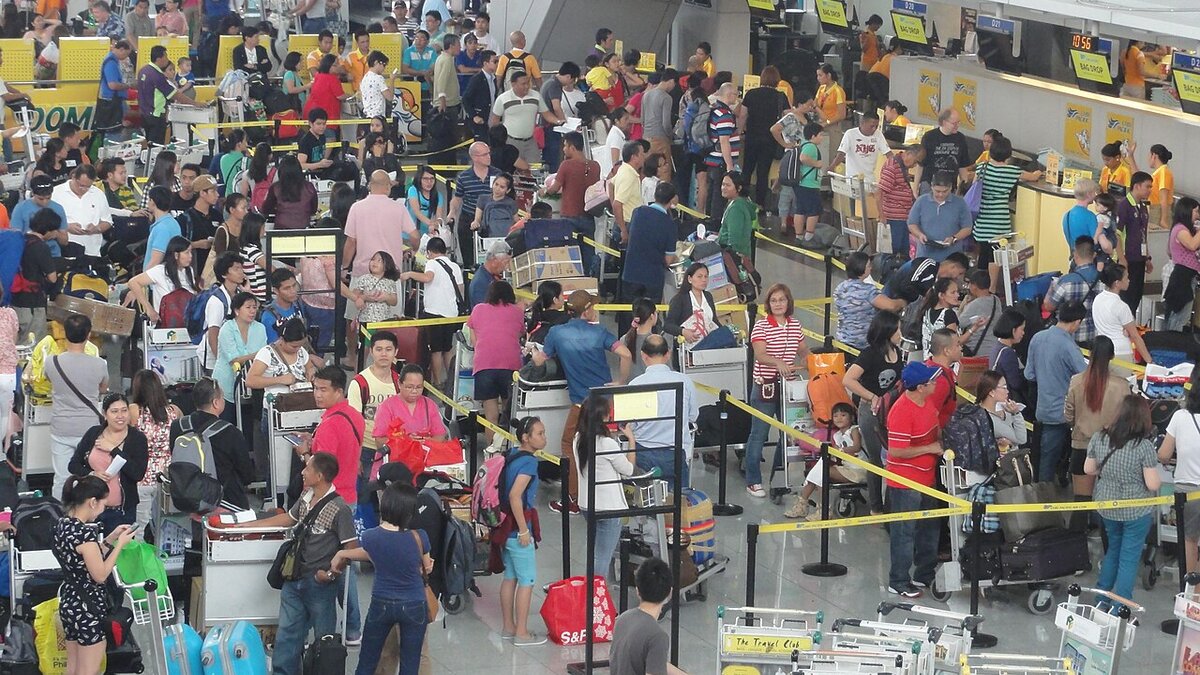
Cover image: travellers moving through a busy international airport terminal — photo by Patrick Roque (talk) (Uploads), CC BY-SA 3.0, via Wikimedia Commons.
Global tourism is still growing — just more slowly. According to UN Tourism, international arrivals rose 2% in the first quarter of 2026 compared with the same period a year earlier, reaching roughly 307 million international trips. It is continued growth, but with a clear note of caution: the pace slowed sharply as the quarter wore on.
The standout data point is March, when growth decelerated to just 0.4% as disruptions linked to Middle East tensions took their toll. After years of post-pandemic surges, the first quarter of 2026 reads less like a boom and more like a sector settling into a more normal — and more uncertain — rhythm.
Europe stays out in front
Europe remains the world's leading tourism region, welcoming more than 130 million international visitors in the first quarter alone — growth of around 4%, supported by resilient demand. International visitor spending across Europe is projected to grow about 7.1% across 2026, outpacing arrivals as travellers spend more per trip even when the headcount grows modestly.
A notable trend underpins that resilience: amid geopolitical uncertainty, many travellers are increasingly choosing destinations closer to home, favouring shorter trips and regional travel over long-haul adventures.
Why the slowdown matters
A deceleration from a robust start to a near-flat March is significant because it suggests the external environment — not a lack of underlying appetite — is the constraint. Several forces are weighing on momentum:
- Geopolitical disruption, particularly around the Middle East, dampening certain corridors.
- Economic caution, with travellers prioritising value and proximity.
- A high base, as the post-pandemic recovery's easiest gains are now behind the industry.
Growth, but with a wider range of outcomes
The picture UN Tourism paints is one of continued expansion within a more uncertain band. Demand for travel remains fundamentally strong, and spending is rising, but the sector is more exposed than it was a year ago to shocks — geopolitical, economic and operational — that can quickly cool specific markets.
What it means for the industry
For destinations and operators, the message is to plan for steadier, less explosive growth and to build resilience against volatility. The shift toward closer-to-home and higher-spending travel also rewards destinations that can capture value rather than just volume — a theme likely to define tourism strategy through the rest of 2026.
The bottom line
International tourism entered 2026 still growing, with Europe leading and spending rising. But the sharp March slowdown is a reminder that the sector's expansion is now unfolding against a more uncertain backdrop — and that the easy, surging recovery of recent years has given way to something more measured.



Post a comment