

Spring (March-May) and autumn (September-November) are the best times to visit Morocco for Marrakech, the Atlas mountains and the Sahara. Here is the month-by-month breakdown, with weather data.
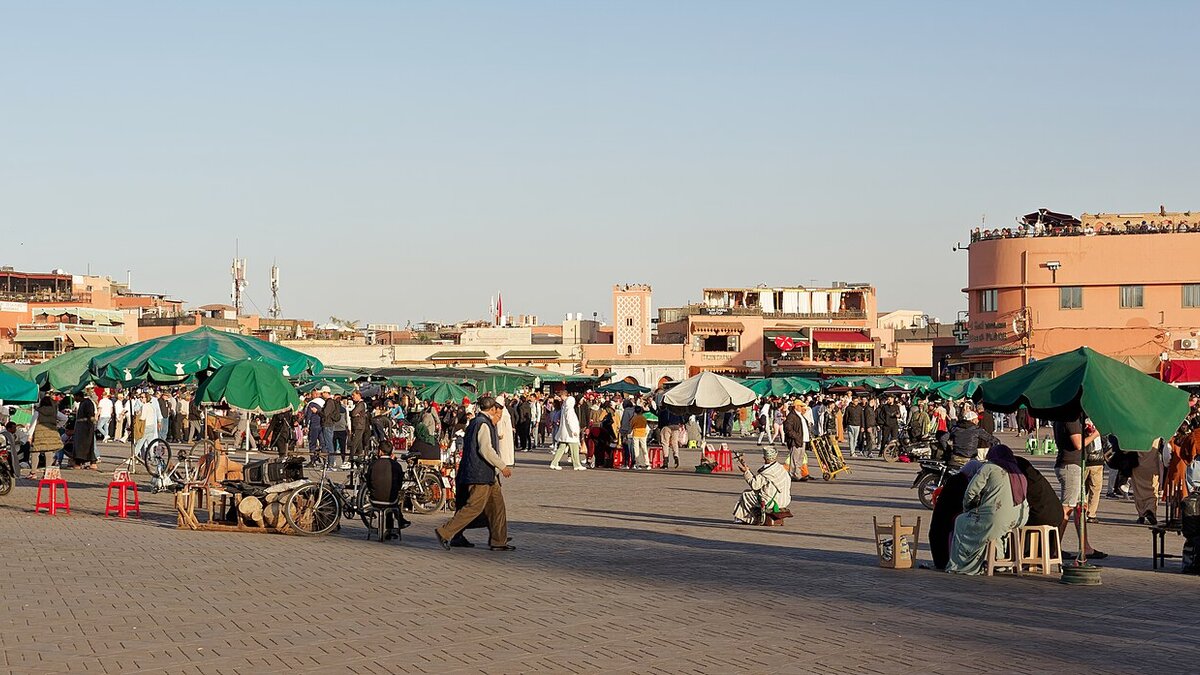
Cover image: Jemaa el-Fnaa square in Marrakech, Morocco, busy with visitors at golden hour — photo by Jakub Hałun, CC BY 4.0, via Wikimedia Commons.
The best time to visit Morocco is in spring (March to May) or autumn (September to November), when Marrakech and the imperial cities sit in the low-to-mid 20s Celsius, the High Atlas trails are open, and the Sahara is comfortable rather than scorching. Those two windows suit most itineraries — city, mountains and desert in one trip. Winter (December to February) is the move for surfers and budget travelers; summer belongs on the Atlantic coast, because inland cities get seriously hot.
The honest answer depends on what you are going for. Morocco is a year-round destination with three different climates stacked on top of each other — Mediterranean and Atlantic coast, high mountains, and the pre-Saharan south — so the month you pick should follow the trip you want. Here is the breakdown, with real climate numbers.
Best time to visit Morocco by trip type
- Marrakech, Fes and the imperial cities: March–May and September–November. Mild days, cool evenings, long sightseeing hours.
- High Atlas trekking (Toubkal, Todra, M'Goun): April–June and September–October. Toubkal winter ascents (November–April) need crampons and a guide.
- Sahara (Merzouga, Zagora, M'Hamid): October–April. Lonely Planet's Morocco-based editors single out May and October as the months when the desert is comfortable around the clock. Sandstorms are possible January to May.
- Surf (Taghazout, Essaouira): November–February, when the big Atlantic swells arrive. Beginners get manageable waves all summer.
- Skiing (Oukaimeden, 75 km from Marrakech): December–February, the High Atlas's small but scenic ski area.
- Kitesurfing (Dakhla): April–September has the strongest wind statistics; the lagoon works year-round.
Morocco weather by month: the data
The table below uses the 1991–2020 climate normals recorded at Marrakech Menara airport (NOAA data) — a good proxy for the country's most-visited interior region. Coastal cities run 4–6°C cooler in summer; the Sahara swings hotter by day and much colder at night in winter.
| Month | Avg. high | Avg. low | Rain | Verdict |
|---|---|---|---|---|
| January | 19.1°C | 5.9°C | 25 mm | Mild days, cold nights; surf season |
| February | 20.7°C | 7.6°C | 26 mm | Good city weather; Ramadan 2027 starts ~Feb 8 |
| March | 23.6°C | 10.3°C | 35 mm | Spring begins; wettest month |
| April | 25.7°C | 12.4°C | 26 mm | Prime time — valleys green, trails open |
| May | 29.4°C | 15.2°C | 11 mm | Prime time — Sahara comfortable |
| June | 33.6°C | 17.9°C | 3 mm | Hot inland; coast excellent |
| July | 37.7°C | 20.6°C | 2 mm | Peak heat inland; festivals + coast |
| August | 37.4°C | 21.1°C | 5 mm | Peak heat; domestic tourism on the coast |
| September | 32.5°C | 18.6°C | 15 mm | Shoulder season begins; sea warmest |
| October | 28.5°C | 15.7°C | 19 mm | Prime time — desert and cities both easy |
| November | 23.1°C | 10.7°C | 30 mm | Cool, quiet, good value |
| December | 20.1°C | 7.3°C | 24 mm | Mild city breaks; swells arrive |
Two numbers put the summer heat in perspective: Marrakech's July average high is 37.7°C, and the city's all-time record is 49.6°C. Sightseeing in July and August is a dawn-and-dusk activity in the interior — which is exactly why the coast, where Essaouira rarely leaves the mid-20s, dominates summer plans.
Spring in Morocco (March to May)
Spring is Morocco at its most photogenic: the valleys of the High Atlas and the Anti-Atlas are still green from the winter rains, April daytime temperatures in Marrakech average a near-perfect 25.7°C, and the desert has not yet tipped into furnace mode. It is also the busiest season for trekking agencies and the most expensive for riad rooms in Marrakech and Fes — book six to eight weeks ahead for April. Pack layers: nights in the Atlas and the desert can still touch freezing in March.
Autumn in Morocco (September to November)
September still carries real summer heat (32.5°C average high in Marrakech) but the Atlantic is at its warmest for swimmers, and by October the interior settles into the high 20s — the month many Morocco repeat-visitors consider the single best of the year. It lines up neatly with school breaks, too: our guide to October half-term holidays lists Morocco-style winter-sun options that sell out first. November turns cooler and wetter, and prices ease with it.
Summer (June to August): go to the coast
Summer is Morocco's low season inland and its high season on the northern beaches, where Moroccan and French holidaymakers outnumber everyone else. The smart summer itineraries are coastal: Essaouira for wind and seafood, Rabat and Asilah for culture, Dakhla for kitesurfing, plus the festival calendar — the Fes Festival of World Sacred Music and the Gnawa Festival in Essaouira historically anchor the early-summer months (confirm exact dates each year). If you must see Marrakech in August, plan pools, hammams and air-conditioned afternoons.
Winter (December to February): surf, ski and city breaks
Winter is the quiet secret. Marrakech averages a very pleasant 20.1°C daytime high in December — t-shirt weather at lunchtime — while the Atlas keeps snow on its peaks and Oukaimeden runs its lifts. On the coast, December to February brings the largest swells of the year to Taghazout's point breaks. The trade-offs: nights are genuinely cold (Marrakech averages a 7.3°C low in December, near-freezing in the desert), and the north coast is too cool for beach weather.
Ramadan 2027: dates and what actually changes
Ramadan 1448 is expected to begin around February 8, 2027 and end around March 8, 2027, with Eid al-Fitr on roughly March 9 (IslamicFinder's estimate — the real dates depend on moon sighting and shift by a day either way). For travelers this means: daylight hours run quieter, some local cafes and smaller shops close until sunset, alcohol service narrows outside hotels, and evenings become genuinely festive after the fast breaks. Museums, monuments, airports and most tourist restaurants operate normally, and many travelers consider a night of Ramadan in Marrakech — Jemaa el-Fnaa at iftar — one of the best evenings the country offers.
The cheapest time to visit Morocco
Room rates in Marrakech riads and Fes guesthouses drop noticeably from June through August (heat = low demand inland) and again in the November-to-mid-December window. Flights from Europe follow the same curve outside school holidays. If your dates are flexible, the second half of November and late January deliver the same sights for meaningfully less — just verify what your policy excludes before you travel, because desert excursions and moped rentals are exactly the activities where what your travel insurance actually covers matters. Cruise passengers should also note that Casablanca and Agadir are regular ports of call on winter itineraries — our cruise cost breakdown explains how those fares compare to flying and hoteling it.
Frequently asked questions
What is the best month to visit Morocco?
April and October are the safest all-round picks: Marrakech averages pleasant highs of about 25.7°C in April and 28.5°C in October, rain is low, and both the Atlas trails and the Sahara are comfortable. March-May and September-November are the broader sweet spots.
When is the hottest time of year in Morocco?
July and August. Marrakech averages daily highs of 37.7°C in July and 37.4°C in August, and the city's recorded maximum is 49.6°C. Coastal cities like Essaouira stay far milder because of the Atlantic.
What is the rainy season in Morocco?
November to March on most of the country, though rainfall is modest everywhere. Marrakech gets only about 221 mm per year, with March the wettest month (35.2 mm on average) and July the driest (2.2 mm).
Is Morocco worth visiting in December?
Yes for cities, surf and mountains: Marrakech averages a mild 20.1°C daytime high, winter brings the biggest Atlantic swells to Taghazout, and the Oukaimeden ski area near Marrakech typically opens December-February. It is not beach weather on the north coast.
Should I avoid visiting Morocco during Ramadan?
No, but plan around it. Ramadan in 2027 is expected to run from about February 8 to March 8 (dates shift with the moon). Days are quieter, some cafes close in daylight, and evenings turn festive. Tourist restaurants and hotels operate normally in the main destinations.
Sources
- Lonely Planet — The best time to visit Morocco (updated July 27, 2026)
- NOAA 1991–2020 climate normals, Marrakech Menara (via Wikipedia's Marrakesh climate table)
- IslamicFinder — Ramadan 2027 (1448) expected dates


Post a comment