

Archer Aviation is acquiring Boeing's entire autonomous-flight portfolio — Wisk Aero, Insitu and SkyGrid — in exchange for a 19.75% stake in Archer, reshaping who owns autonomy in aerospace.
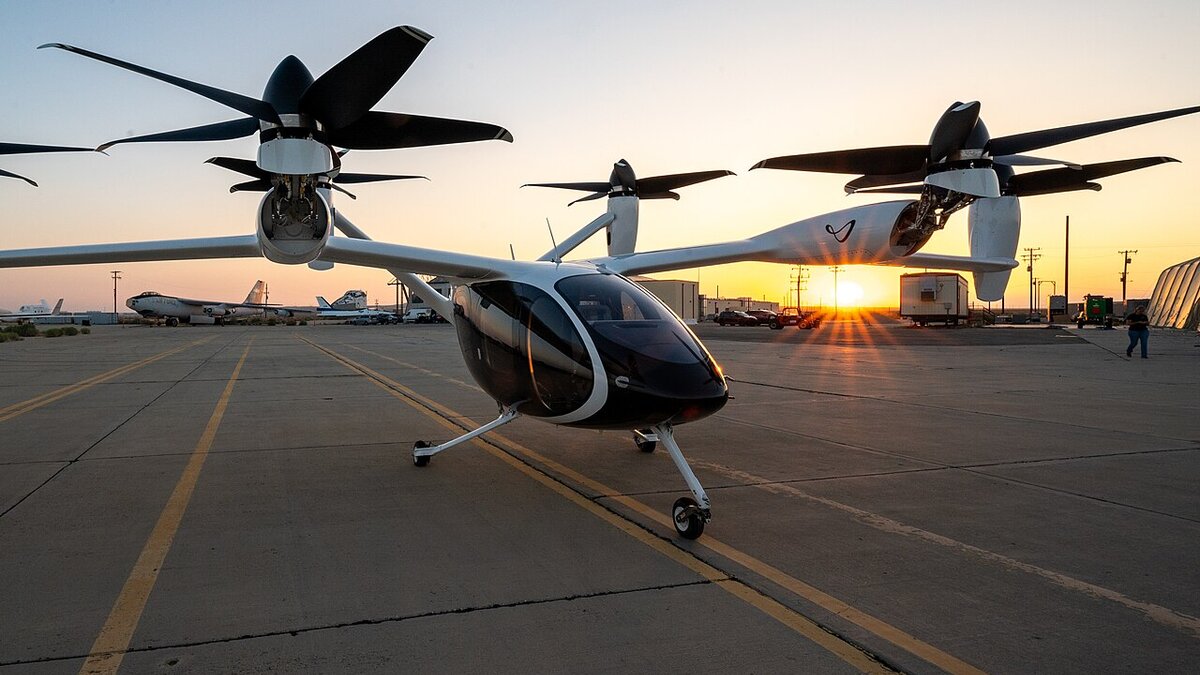
Cover image: An eVTOL air taxi on the ramp after delivery to a military emerging-technologies test unit — photo by Harlan Huntington, Public domain, via Wikimedia Commons.
Archer Aviation announced on 10 August 2026 that it would acquire Boeing's entire autonomous-flight portfolio — Wisk Aero, Insitu and SkyGrid — in exchange for a 19.75% equity stake in Archer. Insitu alone books more than $200 million a year in revenue, an order of magnitude more than the $5 million Archer reported for Q2 2026, and a fresh wave of analyst coverage this week has put the deal back at the centre of the air-taxi debate.
The transaction, confirmed by Boeing executive Brian Yutko as "a win-win for Boeing and Archer", turns the planemaker from the owner of three operating autonomy businesses into Archer's anchor shareholder. Archer, in turn, gets a profitable defence-drone line, a self-flying aircraft programme and a dataset it says spans more than two million flight hours to train its AI models.
What exactly is Archer getting from Boeing?
Three businesses change hands, and they are not the same kind of asset:
- Wisk Aero — the autonomous passenger-aircraft developer, giving Archer a self-flying technology stack to complement its piloted Midnight air taxi.
- Insitu — the surveillance-drone specialist whose aircraft serve customers in 35 nations, generating more than $200 million in annual revenue.
- SkyGrid — Boeing's autonomy and airspace-technology unit, folded into Archer's platform plans.
- Plus the data — Archer says it will build an AI model trained on Boeing's dataset of more than two million flight hours.
For a company whose entire passenger revenue base is still experimental aircraft, adding a business that already generates nine figures a year changes the financial profile overnight. It also gives Archer something its air-taxi rivals have lacked: defence customers who pay while certification grinds on.
Why Boeing handed over its autonomy future
Boeing's rationale, as framed by Yutko, is partnership rather than retreat: "We look forward to collaborating with Archer to drive continued innovation in aerospace, defense and autonomy." Holding 19.75% of Archer keeps Boeing exposed to whatever the combined autonomy platform produces, without carrying the operating cost and strategic distraction of running three units that never became core to its commercial and defence franchises.
For Boeing, the move lands during a period when the company's attention and capital are firmly fixed on its core business — the delivery race with Airbus and certification work such as the 737 MAX 7. Trading non-core autonomy assets for a meaningful stake in the company now building the sector's most-watched air taxi is a way to stay in the game without running it.
What it means for Archer's Midnight air taxi
Midnight, Archer's electric vertical take-off and landing aircraft, is built for short city hops with a range of roughly 100 kilometres (62 miles). The acquired units plug directly into its roadmap: Wisk's self-flying technology points at an autonomous version of the air taxi, SkyGrid's airspace tools address the traffic-management problem that has always sat behind urban flight, and Insitu's Halo hybrid logistics drone gives Archer a second product line with paying military and government customers today.
Archer describes the combined ambition as an end-to-end "physical AI" platform — aircraft, autonomy and the software to manage them. Analysts covering the deal this week, including 24/7 Wall St., treated Insitu's revenue as the deal's anchor: it is real money arriving while the passenger business is still pre-revenue.
Archer–Boeing deal at a glance
| Detail | What was announced |
|---|---|
| Announced | 10 August 2026 |
| Assets to Archer | Wisk Aero, Insitu, SkyGrid |
| Consideration | 19.75% equity stake in Archer to Boeing |
| Insitu revenue | More than $200m a year |
| Archer Q2 2026 revenue | About $5m |
| Data asset | Boeing's 2m+ flight-hour dataset for AI training |
Why the deal matters for travellers
Air taxis remain a small corner of most itineraries, but the economics of the sector decide whether short urban flights ever become a normal airport transfer rather than a novelty. Autonomy is the industry's great cost lever — removing the pilot from a two-seat hop is what turns a $200 ride into a $40 one — and this deal concentrates more self-flying intellectual property inside a single company than any previous transaction in the sector.
Travellers should read it as a consolidation signal rather than a launch announcement: no new service dates were attached to the deal, and Midnight's certification path is unchanged on paper. What changes is who owns the pieces — and the fact that the company building the most-hyped electric air taxi now also owns a defence-drone business with 35 nations as customers, plus AI training data from an aviation industry already racing to deploy AI in everything from pricing to the order books showcased at this summer's Farnborough Airshow.
Frequently asked questions
What did Boeing sell to Archer Aviation?
Boeing agreed to transfer its autonomous-flight businesses — Wisk Aero, Insitu and SkyGrid — to electric air-taxi maker Archer Aviation. The deal was announced on 10 August 2026, with Boeing taking a 19.75% equity stake in Archer as consideration rather than cash.
How much of Archer does Boeing now own?
Boeing's consideration for the three autonomy units is a 19.75% equity stake in Archer Aviation, per the deal as reported by Simple Flying. That converts Boeing from the owner of three operating autonomy businesses into a large minority shareholder with upside tied to Archer's air-taxi and defence ambitions.
What is the Archer Midnight aircraft?
Midnight is Archer's electric vertical take-off and landing air taxi, designed for short city trips with a range of roughly 100 kilometres (62 miles). Under the Boeing deal Archer also plans an end-to-end physical AI platform and continues work on its Halo hybrid logistics drone.
Does the Archer Boeing deal change air-taxi launch dates?
No new passenger-service dates were attached to the deal. What it changes is the toolkit: Archer gains Insitu's profitable defence-drone business, autonomy engineering from Wisk and SkyGrid, and a training dataset drawn from Boeing's more than two million flight hours.




Post a comment