

Australia's competition regulator has granted final authorisation for the Singapore Airlines ANA joint venture until 10 September 2031, allowing revenue sharing and coordination on Australia–Japan routes — five years after it blocked a similar Qantas–Japan Airlines tie-up.
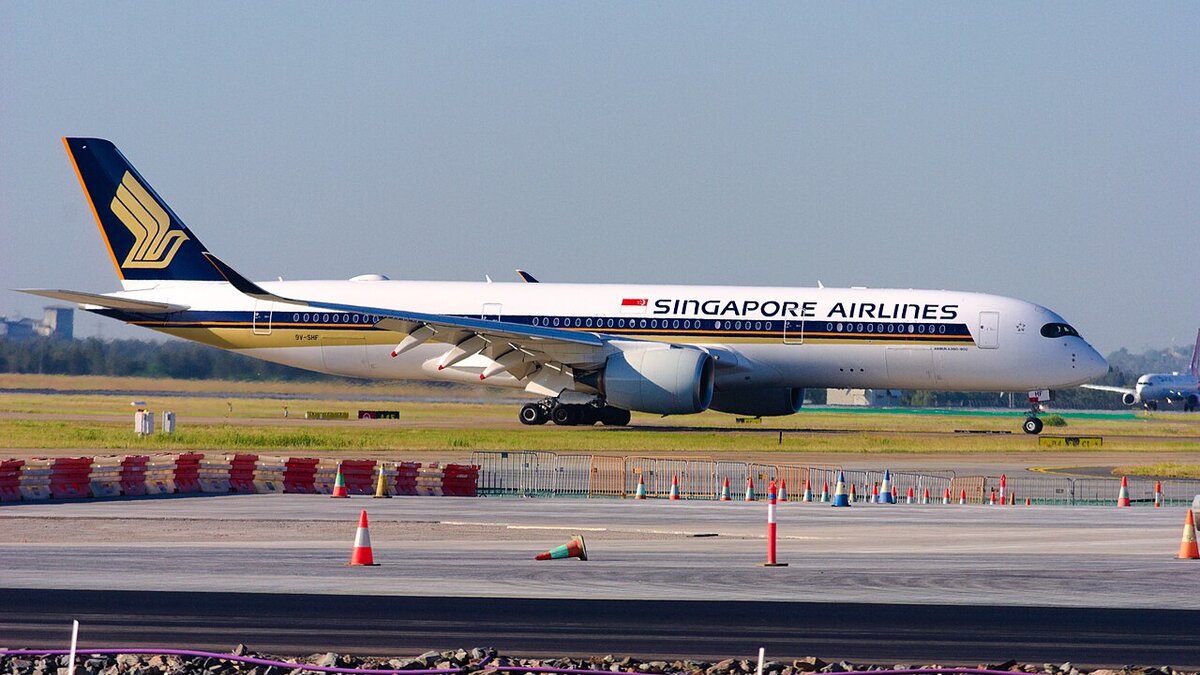
Cover image: A Singapore Airlines Airbus A350 taxiing at Sydney Airport — photo by DS28, CC BY-SA 4.0, via Wikimedia Commons.
The Singapore Airlines ANA joint venture has cleared its final regulatory hurdle in Australia. On 19 August 2026, the Australian Competition and Consumer Commission (ACCC) granted final authorisation for Singapore Airlines and All Nippon Airways (ANA), Japan's largest carrier, to operate a joint venture covering passenger services between Australia and Japan. The approval — valid until 10 September 2031 — permits the two Star Alliance carriers to share revenue on certain Australia–Japan routes and to coordinate scheduling, pricing, sales, marketing, airport operations, customer service and information technology. The decision arrives almost exactly five years after the same regulator refused a comparable Qantas–Japan Airlines alliance, a contrast that says a great deal about how the Australia–Japan market has changed.
What did the ACCC approve?
The authorisation, lodged on 5 March 2026, covers a Joint Venture Agreement between the two airlines for routes linking Japan with Singapore, Australia, India, Indonesia and Malaysia. For the Australia–Japan corridor specifically, the ACCC's register states the carriers may share revenue on certain routes, including ANA's direct flights and Singapore Airlines' one-stop services via Singapore.
Beyond revenue sharing, the authorised conduct lets the partners:
- Coordinate route planning, scheduling and pricing across the approved markets
- Align sales, marketing, airport operations and customer service
- Harmonise passenger and baggage policies
- Build shared IT tools to support the joint venture
The ACCC concluded the arrangement is "likely to result in public benefits, and is unlikely to result in any material public detriment". The determination takes effect on 10 September 2026 unless reviewed by the Australian Competition Tribunal.
| Milestone | Date |
|---|---|
| Application lodged with the ACCC | 5 March 2026 |
| Draft determination issued | 23 July 2026 |
| Final authorisation granted | 19 August 2026 |
| Decision takes effect | 10 September 2026 |
| Authorisation expires | 10 September 2031 |
Why did the ACCC approve this when it blocked Qantas and JAL in 2021?
The obvious question for industry watchers is why coordination between Singapore Airlines and ANA passes muster when a Qantas–Japan Airlines joint business agreement did not. In September 2021, the ACCC denied authorisation for that tie-up, finding it would likely lead to reduced competition as international travel resumed. The regulator noted at the time that Qantas and JAL together carried around 85 per cent of passengers travelling between Australia and Japan before the pandemic, and warned the alliance would make it harder for rivals to enter or expand.
The Singapore Airlines–ANA structure is different in kind. ANA is one of several carriers flying Australia–Japan nonstop, not half of a dominant pair, while Singapore Airlines competes on the corridor only with one-stop itineraries via its Changi hub. Combining a nonstop operator with a connecting operator adds a coordinated alternative rather than merging the two largest direct competitors — which is why the regulator saw no material detriment where it once saw an 85 per cent lock-up.
What does the joint venture mean for Australia–Japan fares and capacity?
For travellers, the near-term effect should be more coherent scheduling and pricing across the two networks rather than dramatic fare moves. Revenue sharing removes the incentive for each airline to undercut the other on shared routes, but it also gives both a reason to add capacity and align timetables so connections work — a public benefit the ACCC weighed in its assessment.
Demand is certainly there. Japan remains Australia's hottest outbound story, and inbound records keep falling — Japan logged a record July for foreign visitors in 2026 even as Chinese arrivals dipped. Japanese carriers have responded: ANA more than doubled its Perth–Tokyo Narita service from three weekly flights to daily for the northern winter 2025–26, while Japan Airlines lifted Melbourne–Narita from three weekly to daily over the same season. A structurally supported one-stop option via Singapore adds pricing pressure on those nonstops from a different direction.
What does it mean for Star Alliance flyers?
For Star Alliance loyalists, the joint venture is straightforwardly good news. KrisFlyer and ANA Mileage Club members should see better-aligned connections, coordinated ticketing and smoother baggage handling when mixing the two carriers between Australia and Japan — whether flying ANA nonstop from Sydney or Perth, or routing via Singapore on SIA metal.
The via-Singapore option matters most for cities without nonstop Japan service, and for travellers combining Japan with South-East Asia. It also deepens one-stop competition on a corridor where connecting alternatives keep shifting — Korean Air is returning to Melbourne via Seoul, while AirAsia X's Sydney–Kuala Lumpur suspension removed a budget one-stop pathway earlier this year.
Who flies between Australia and Japan today?
The corridor is served nonstop by Qantas and Jetstar from the Australian side and by ANA and Japan Airlines from Japan, with Jetstar covering Sydney, Melbourne and Brisbane to Tokyo Narita plus seasonal Osaka flying. Virgin Australia's international network, by contrast, still leans on partners for North Asia. One-stop traffic flows over Singapore, Hong Kong, Seoul and other hubs.
That spread of five-plus effective competitors is precisely the landscape the ACCC wanted in 2021 and now has. The five-year clock matters, though: the airlines will need to demonstrate consumer benefits — capacity growth, connectivity, stable fares — before any re-authorisation bid ahead of September 2031.
Frequently asked questions
What is the Singapore Airlines ANA joint venture?
It is a Joint Venture Agreement under which Singapore Airlines and All Nippon Airways share revenue on certain Australia–Japan routes and coordinate scheduling, pricing, sales, marketing, airport operations, customer service and IT. The ACCC granted final authorisation on 19 August 2026, covering routes between Japan and Singapore, Australia, India, Indonesia and Malaysia, with the approval running until 10 September 2031.
When does the ACCC authorisation take effect and expire?
The final determination was issued on 19 August 2026 and takes effect on 10 September 2026, unless the Australian Competition Tribunal reviews it. The authorisation then runs for five years, expiring on 10 September 2031. The airlines lodged their application on 5 March 2026, and the ACCC issued a draft determination proposing approval on 23 July 2026.
Why was this approved when the Qantas–Japan Airlines alliance was rejected?
In September 2021 the ACCC blocked the Qantas–JAL joint business because those two carriers held about 85 per cent of pre-pandemic Australia–Japan traffic, so coordination risked reducing competition. Singapore Airlines and ANA are differently placed: ANA is one of several nonstop operators, and SIA competes only via one-stop Singapore itineraries, so the ACCC found no material public detriment.
Will the joint venture make Australia–Japan flights cheaper?
Not automatically. Revenue sharing means the partners no longer undercut each other on covered routes, but coordinated schedules and a stronger one-stop option via Singapore add competitive pressure on nonstop operators such as Qantas, Jetstar and Japan Airlines. The ACCC judged the net effect a public benefit, and the five-year term gives it a checkpoint to reassess in 2031.
What do Star Alliance frequent flyers get from the deal?
KrisFlyer and ANA Mileage Club members should see better-timed connections, coordinated ticketing and smoother baggage handling when combining the two carriers between Australia and Japan. The joint venture also strengthens the via-Singapore routing for Australian cities without nonstop Japan service, giving Star Alliance travellers a more competitive alternative to oneworld's Qantas–JAL nonstop options.
Sources
- ACCC — Singapore Airlines Limited and Ors (authorisation register AA1000716-1)
- ch-aviation — Australian watchdog authorises Singapore Airlines-ANA JV
- Mirage News — ACCC Greenlights Singapore Airlines-ANA Partnership
- ACCC — Qantas and Japan Airlines alliance not in the public interest
- Australian Aviation — ACCC rejects Qantas-Japan Airlines collaboration deal
- Karryon — JAL, ANA double Aussie flights as travel to Japan continues to boom



Post a comment