

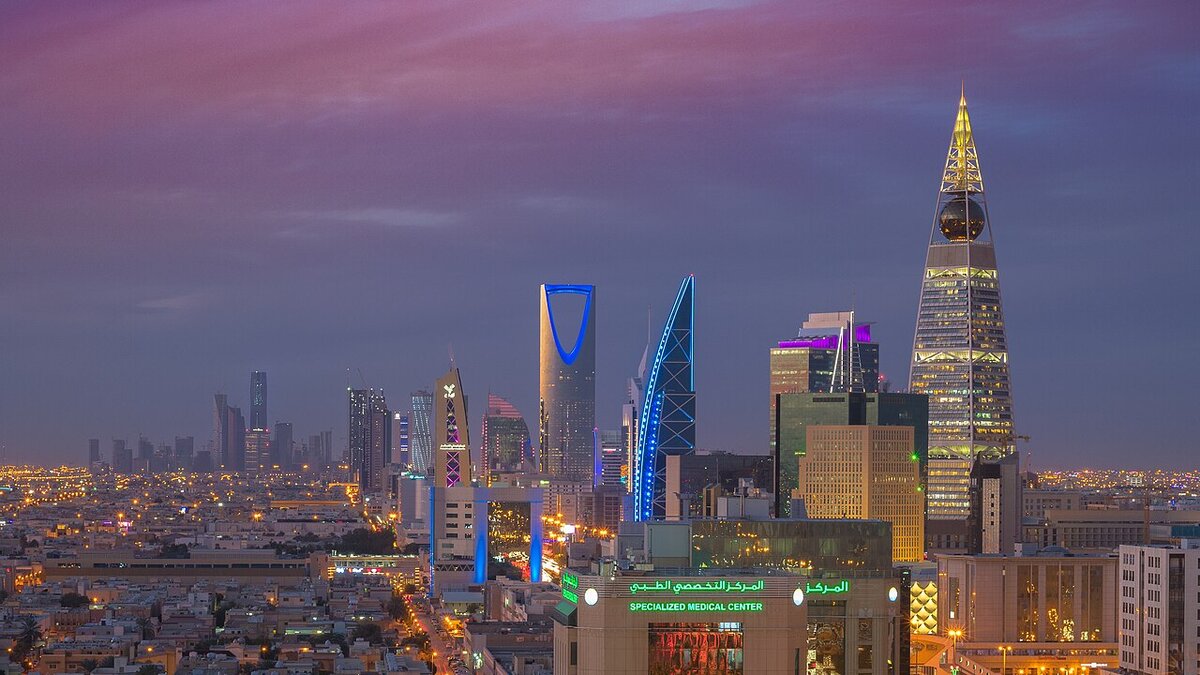
With Riyadh Air airborne, airports expanding and visa rules loosening, Saudi Arabia is pressing an ambitious bid to become a global tourism and aviation hub under Vision 2030.
Cover image: the Riyadh skyline, including the Kingdom Centre tower — photo by B.alotaby, CC BY-SA 4.0, via Wikimedia Commons.
Few countries are reshaping their travel offer as aggressively as Saudi Arabia. Under Vision 2030, the national strategy to diversify beyond oil, the Kingdom is pouring investment into aviation, airports, tourism megaprojects and visa liberalisation — and in 2026, several of those bets are coming online at once.
The most visible milestone is the launch of Riyadh Air, the new flag carrier that began commercial flights in June. But the airline is just one instrument in a much larger campaign to turn Saudi Arabia into a destination and a connecting hub rather than a place travellers simply pass over.
An aviation strategy built for scale
The aviation push is deliberately ambitious. Riyadh Air is targeting more than 100 destinations by 2030, and it is being paired with massive airport investment — including a new mega-airport in the capital designed to handle the passenger volumes the strategy envisions. The logic is that a world-class hub needs both a flag carrier and the infrastructure to move tens of millions of connecting and inbound passengers.
This positions the Kingdom to compete directly with the established Gulf hubs, leveraging the largest economy and population in the region as a built-in demand base.
Opening the door to tourists
Aviation is only half the story. Saudi Arabia has been steadily liberalising its visa regime, making it dramatically easier for leisure travellers to visit a country that, until recently, was largely closed to tourism. That shift underpins a wave of destination development:
- Heritage and culture — sites like AlUla being developed into marquee global attractions.
- Giga-projects — large-scale tourism and entertainment developments designed to draw international visitors.
- Religious tourism — the enduring, large-scale flows of pilgrimage traffic that give Saudi aviation a unique foundation.
The scale of the ambition
Vision 2030 set out to transform tourism from a niche into a pillar of the economy, with targets measured in tens of millions of additional annual visitors. Achieving that requires every piece to work together — airline, airports, hotels, attractions and the visa rules that let people in. The convergence of these elements in 2026 is what makes this year a genuine inflection point for Saudi travel.
The challenges ahead
The ambition is matched by real hurdles: building a tourism brand from a low base, developing hospitality capacity and a skilled workforce at speed, competing with entrenched regional hubs, and doing it all against a backdrop of regional geopolitical volatility. Megaprojects also carry execution and timeline risks. The vision is clear; the delivery is the hard part.
The bottom line
With Riyadh Air in the air, airports rising and visas easing, Saudi Arabia's Vision 2030 tourism push has moved from blueprint to reality in 2026. Whether the Kingdom becomes a true global hub will play out over years — but the pieces are now visibly clicking into place.



Post a comment