

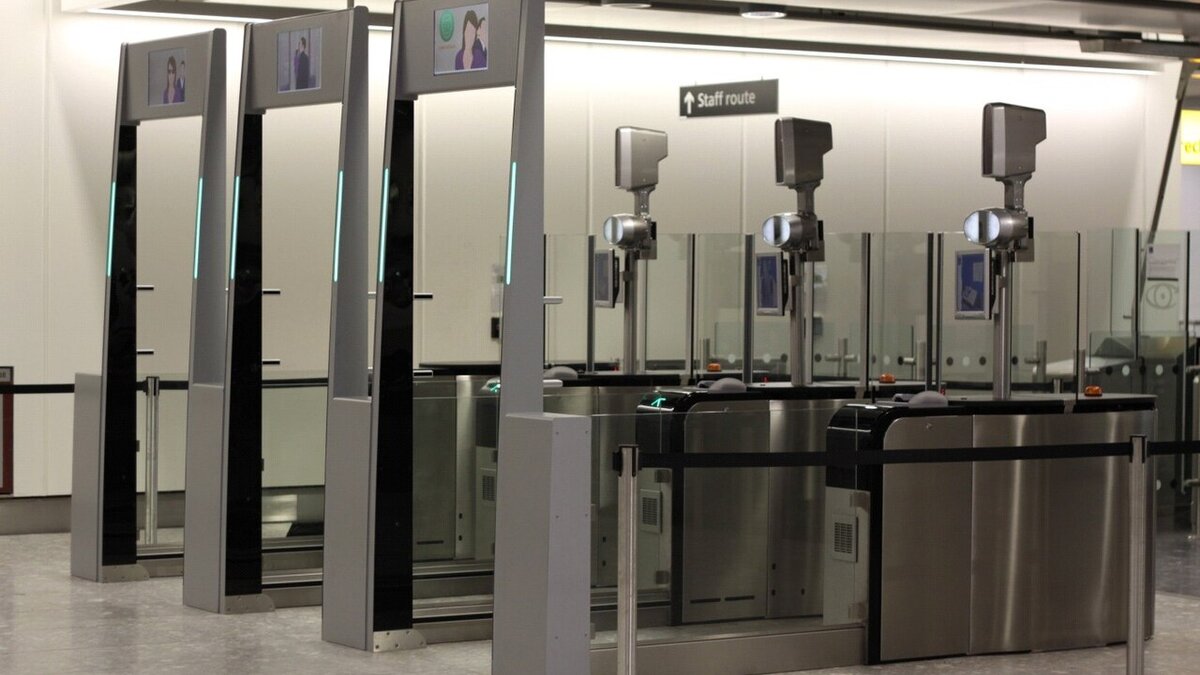
Half of air travellers now use facial recognition somewhere in their journey. With TSA Touchless ID at 65 US airports, the EU's EES fully live and Changi passport-free, 2026 is the year biometric boarding went mainstream — and the privacy fight intensified.
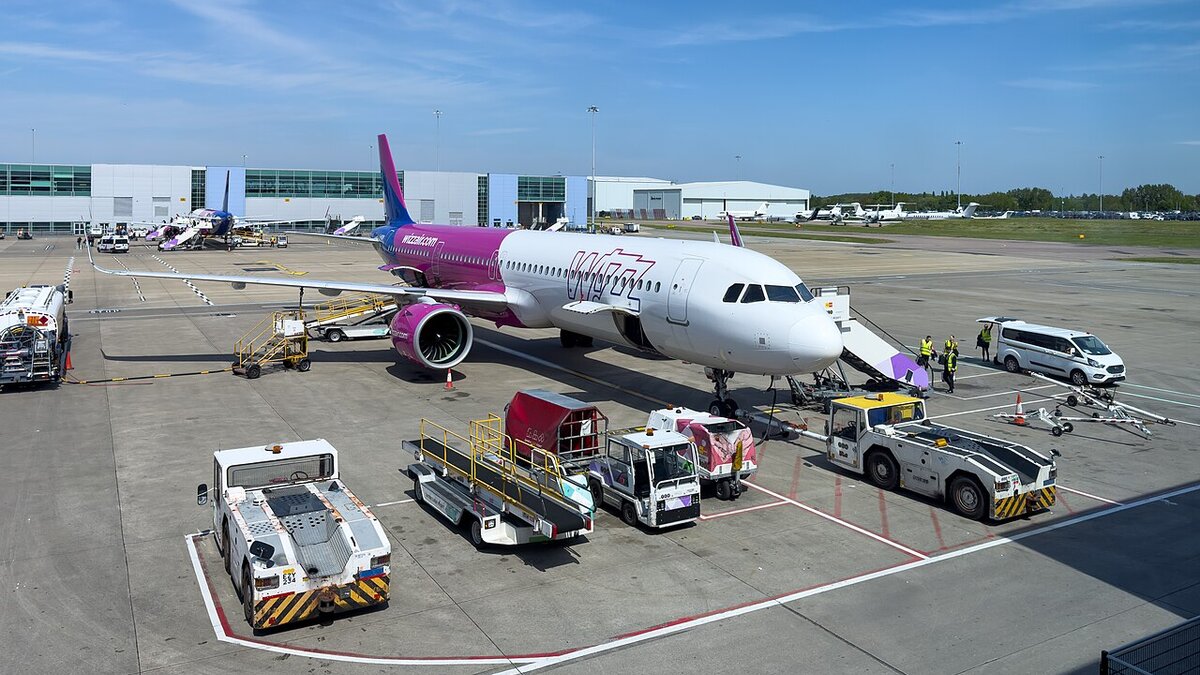
Cover image: biometric boarding gate scanning a traveller's face at an airport — photo by Home Office, CC BY 2.0, via Wikimedia Commons.
Biometric boarding stopped being a pilot project in 2026 and became the default at much of the world's aviation infrastructure. The US Transportation Security Administration (TSA) expanded its PreCheck Touchless ID face-verification lanes from 15 to 65 airports in early 2026, with five carriers — Alaska, American, Delta, Southwest and United — feeding passenger opt-ins through their apps. US Customs and Border Protection (CBP) says its facial comparison technology has now processed more than 939 million travellers across 238 airports of entry and 59 international departure points. In Europe, the EU's Entry/Exit System (EES) became fully operational on 10 April 2026, registering the face and fingerprints of every non-EU visitor across 29 countries. And in Asia, Singapore's Changi Airport has run fully passport-less immigration since late 2024, cutting clearance from 25 seconds to about 10. IATA, the airline trade body, reports that 50% of passengers used biometrics somewhere in their journey in 2025, up from 46% a year earlier. The technology has arrived; the argument over it is just getting louder.
Which US airports use facial recognition boarding in 2026?
The fastest-moving programme is TSA PreCheck Touchless ID, which lets enrolled PreCheck members clear the document-check podium by looking at a camera rather than presenting ID. According to Biometric Update, the first-quarter 2026 expansion to 65 locations added hubs such as Houston Bush Intercontinental, Washington Dulles, Boston Logan, Miami, Orlando and Baltimore. TSA says verification takes 10 seconds or less, and that Touchless ID photos are deleted within 24 hours of a traveller's scheduled departure.
That sits on top of the TSA's standard camera-equipped credential readers, which The Washington Post reports are already installed at 84 airports, with an agency roadmap envisaging more than 400 installations by late 2026. On the departure side, CBP's biometric exit programme photographs international passengers at the gate; the agency says the matching runs at over 98% accuracy and has caught more than 2,284 impostors. A DHS final rule effective 26 December 2025 now authorises CBP to collect facial biometrics from all non-citizens on both entry and exit. Biometric lanes also helped checkpoints absorb this month's record July 4 travel crush, which pushed TSA throughput to all-time highs.
How is Europe's EES biometric rollout actually going?
The EU's Entry/Exit System began a phased rollout on 12 October 2025 and the European Commission declared it fully operational at all external Schengen borders on 10 April 2026. Every non-EU national entering the 29-country zone now has their facial image and fingerprints captured and stored, replacing the wet-ink passport stamp — a shift covered in detail in our Schengen visa and 90/180-rule guide.
The first peak summer under EES is proving bumpy. Euronews reported on 2 July 2026 that first-time registrations are creating bottlenecks at major hubs and holiday airports, with airlines lobbying to suspend checks in July and August — flexibility EU rules permit when queues become unmanageable. The next biometric layer, the ETIAS travel authorisation, is still tracking towards a late-2026 start.
Which airports are already passport-free?
Asia and the Gulf remain the reference points for end-to-end biometric corridors. Singapore's Immigration & Checkpoints Authority fully rolled out passport-less clearance across all four Changi terminals on 30 September 2024, using face and iris matching, cutting average clearance 60%, from 25 seconds to 10. Dubai International's Smart Gates, meanwhile, verify passengers by face in roughly five seconds across security, immigration and boarding.
These corridors reflect the wider shift towards ICAO-standard digital travel credentials — examined in our report on passport-free travel going mainstream — that is turning the passport into a backup document.
How do the major biometric programmes compare?
| Programme | Region | Status, July 2026 | Scale / speed |
|---|---|---|---|
| TSA PreCheck Touchless ID | United States | Expanded to 65 airports, 5 airlines | Verification in ≤10 seconds; opt-in |
| CBP Biometric Entry/Exit | United States | 238 entry airports, 59 exit locations; mandatory for non-citizens from Dec 2025 | 939m+ travellers processed, 98%+ accuracy |
| EU Entry/Exit System (EES) | Schengen area (29 states) | Fully operational since 10 April 2026 | All non-EU visitors; summer queue pressure |
| Changi passport-less clearance | Singapore | All four terminals since Sept 2024 | Clearance cut from 25 to 10 seconds |
| Dubai Smart Gates | UAE | Live at security, immigration and boarding | Face verification in ~5 seconds |
Do passengers actually want biometric boarding?
The data says mostly yes. IATA's 2025 Global Passenger Survey of more than 10,000 travellers found:
- 50% had used biometrics at some point in their journey, up roughly 20 percentage points since 2022;
- 85% of those who used biometrics were satisfied with the experience;
- 74% would willingly share biometric data to skip showing a passport or boarding pass;
- 42% of those currently unwilling said assured data privacy would change their mind.
Supply is catching up: SITA, the air-transport IT provider, finds biometric border control live at 54% of airports, projected to reach 83% by 2028.
Can you opt out of facial recognition at the airport?
In the US, yes — TSA face scans are officially voluntary and travellers can request manual ID verification. Critics say that right is poorly signposted. The bipartisan Traveler Privacy Protection Act of 2025 (S.1691), championed by Senators John Kennedy and Jeff Merkley, would guarantee a penalty-free opt-out, bar indefinite data storage and restrict use of the scans to identity verification. The bill remains stalled in committee, with airlines, airports and travel trade groups opposing it, according to The Hill. In Europe the calculus differs: EES biometric registration is mandatory for non-EU visitors — the only opt-out is not travelling to the Schengen zone.
Frequently asked questions
Do I have to use facial recognition at US airport security?
No. TSA facial comparison is voluntary, and passengers can ask the officer for a standard manual ID check without losing their place or facing extra screening. Privacy advocates note the opt-out signage is easy to miss, so ask explicitly.
How long is my photo kept after a biometric scan?
TSA says images from routine checkpoint verification are deleted immediately after matching, and PreCheck Touchless ID data within 24 hours of scheduled departure. CBP retains US-citizen photos no more than 12 hours after verification, though non-citizen images feed government databases for longer under the December 2025 rule. EES data is stored in the EU's central system for three years.
Does biometric boarding actually save time?
Where it is fully deployed, yes. Changi's passport-less lanes cut average immigration clearance by 60% to about 10 seconds, Dubai's Smart Gates verify passengers in around five seconds, and TSA quotes 10 seconds or less for Touchless ID lanes. Bottlenecks now occur mainly where biometrics are new, such as first-time EES registration in Europe.
Will I still need a physical passport in 2026?
Yes. Every major programme, including Changi's, still requires a valid passport as the underlying credential; first-time registration and system outages fall back on the physical document. Fully digital travel credentials remain years from replacing the booklet.



Post a comment