

Australia has confirmed A$56.1 million to roll out the digital Australia Travel Declaration nationally, retiring the paper Incoming Passenger Card at capital-city airports by the end of 2026 and at every international airport and seaport within 12-18 months after that.
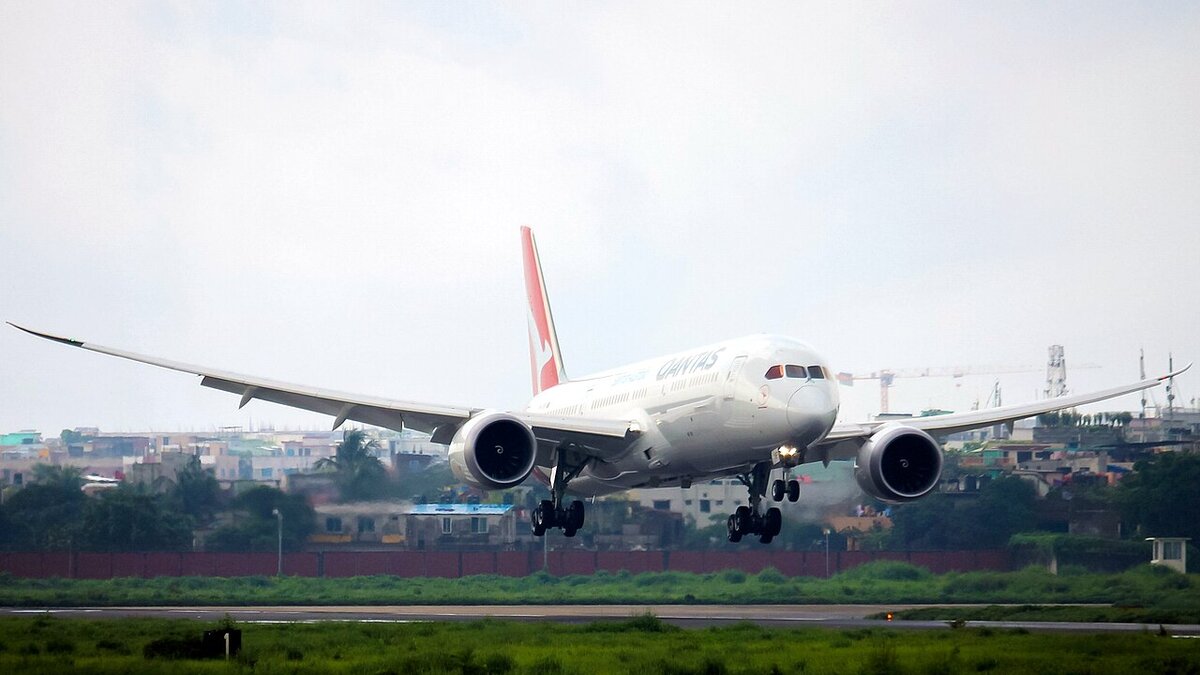
Cover image: Qantas Boeing 787-9 Dreamliner landing on an airport runway — photo by Md Shaifuzzaman Ayon, CC BY-SA 4.0, via Wikimedia Commons.
The Australia Travel Declaration (ATD) — a digital replacement for the paper Incoming Passenger Card handed out on flights into Australia — is going national. On 13 July 2026 the federal government confirmed A$56.1 million over four years to fund the rollout, with the digital declaration to be offered at every Australian capital-city international airport before the end of 2026 and at all international airports and seaports over the following 12 to 18 months. Trialled quietly on selected Qantas flights since October 2024, the ATD lets passengers answer Australia's customs, biosecurity and immigration questions on their phone up to 72 hours before travel and arrive with a QR-coded digital pass instead of a pen-and-paper card. The paper card is not disappearing overnight: it remains available throughout the transition for travellers who cannot, or prefer not to, go digital.
What is the Australia Travel Declaration?
The ATD is the digital successor to the Incoming Passenger Card (IPC), the paper form every arriving international passenger must complete before clearing the Australian border. It asks the same customs, biosecurity and immigration questions as the paper card — what goods you are bringing in, where you have been, and your declarations to the Australian Border Force (ABF) and the Department of Agriculture, Fisheries and Forestry (DAFF).
The difference is when and how you answer. Instead of juggling a card and a borrowed pen in seat 34C, travellers complete the declaration digitally before departure. Once submitted, a digital pass containing a unique QR code is sent to the traveller's nominated email address, to be presented to ABF and biosecurity officers on arrival.
Announcing the funding, Trade and Tourism Minister Don Farrell said making arrivals simpler and quicker means visitors can spend less time filling out forms — a pitch aimed squarely at Australia's inbound tourism recovery and, further out, the Brisbane 2032 Olympics.
When will the paper arrival card disappear?
Not for a while — but the timeline to a digital-first border is now funded and public. The government says the trial, which has processed more than 450,000 Qantas passengers, has been a significant success.
| Date | Milestone |
|---|---|
| October 2024 | Trial begins on selected Qantas Auckland–Brisbane flights |
| August 2025 | Trial extends to Qantas arrivals into Sydney |
| May 2026 | Melbourne added for Qantas arrivals from Auckland and Queenstown |
| 13 July 2026 | A$56.1 million national rollout funding confirmed |
| By end of 2026 | All capital-city international airports offer the ATD, including Perth and Adelaide |
| 2027 onwards (12–18 months) | All international airports and seaports; webform opens the ATD to passengers on any airline |
The paper card stays available during the transition, so nobody will be turned away from the border for not having a smartphone.
How do I complete the digital declaration?
For now, the ATD is only available to passengers on selected Qantas international flights into Brisbane, Sydney and Melbourne. Eligible travellers complete it in the Qantas app, up to 72 hours before travel. After submission, the QR-coded digital pass arrives by email; travellers show it on arrival instead of handing over a paper card.
As the national rollout progresses, the government will add a webform so passengers on any carrier can complete the declaration, and it plans to keep integrating the ATD into other airlines' apps. If you are not on an eligible Qantas flight, nothing changes yet: fill in the orange paper card as usual.
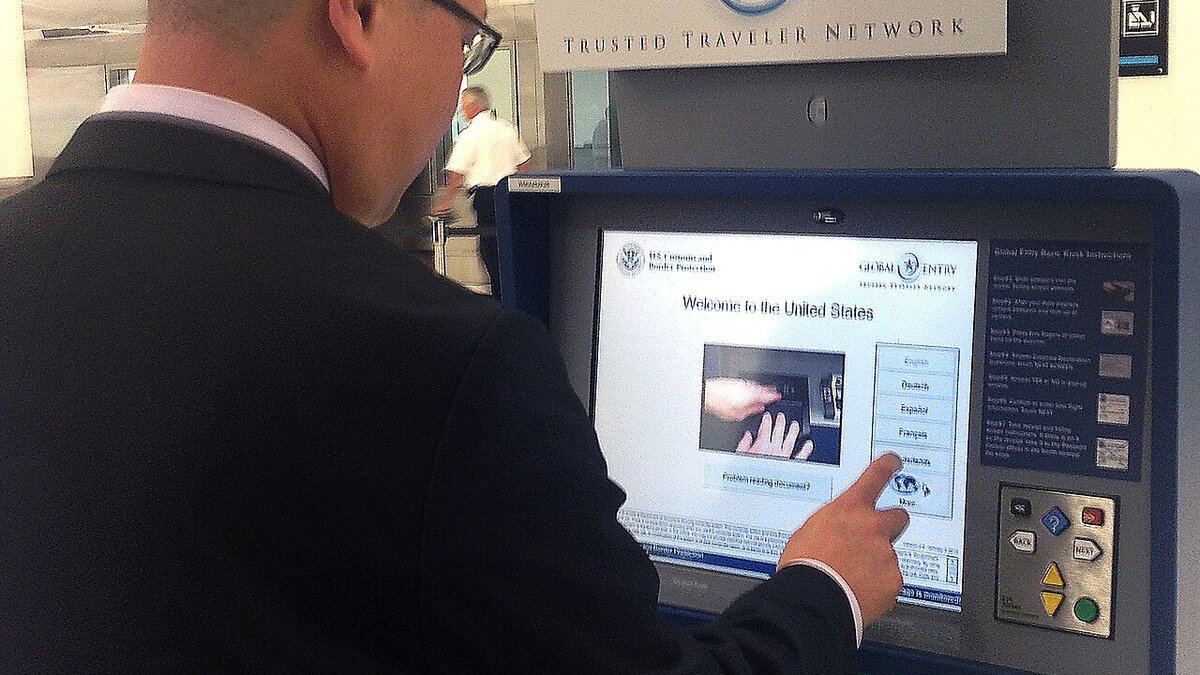
The shift mirrors what is happening at departure gates worldwide, where biometric boarding and face-recognition systems are steadily removing paper from the journey.
Why is Australia digitising its arrival card?
Three reasons dominate. First, queue time: pre-arrival declarations shift form-filling off the aircraft and out of the arrivals hall, which Sydney Airport chief executive Scott Charlton called an important step towards a more seamless border experience. Second, data quality: typed answers submitted before departure are easier for ABF and DAFF to screen than handwriting deciphered at the desk. Third, events: Australia faces a decade of demand peaks, and a digital border scales in a way that pallets of paper cards do not.
For the travel trade, the practical takeaway is briefing clients early. As with any staged rollout, the confusion risk sits in the middle: some passengers will be invited to declare digitally while their travelling companions on another airline still need paper.
How does the ATD compare with other digital border systems?
Australia is a late-ish mover in a fast-converging field. Singapore's SG Arrival Card long ago replaced the paper disembarkation form with a digital declaration submitted in the three days before arrival, and New Zealand's Traveller Declaration (NZTD) offers a digital alternative to its paper arrival card. In Europe, the EU Entry/Exit System (EES) has been fully operational at every Schengen external border since 10 April 2026, replacing passport stamps with biometric records, with the ETIAS travel authorisation to follow, while the UK already requires its Electronic Travel Authorisation from visa-exempt visitors.
The direction of travel is unmistakable: paper is leaving the border. Australia's version is notable for being declaration-only — it is not a visa, not a travel authorisation and involves no fee — which should make the traveller-education job easier than ETIAS or the UK ETA.
Frequently asked questions
Is the Australia Travel Declaration mandatory?
No. During the transition it is an optional alternative to the paper Incoming Passenger Card, currently offered only on selected Qantas flights into Brisbane, Sydney and Melbourne. The paper card remains available for anyone who cannot or does not want to use the digital option.
When can I use the digital declaration?
Eligible Qantas passengers can complete it in the Qantas app up to 72 hours before travel. All capital-city international airports are due to offer it before the end of 2026, with every international airport and seaport — and a webform for all airlines — following over the next 12 to 18 months.
Does the ATD replace a visa or ETA for Australia?
No. The Australia Travel Declaration only replaces the paper arrival card's customs, biosecurity and immigration questions. Travellers still need whatever visa or Electronic Travel Authority their nationality requires; the ATD is free and involves no application or approval process.
Sources
- ABC News — Change to international travel as digital arrival cards roll out
- Minister for Trade and Tourism — Digital passenger cards to streamline Australia's borders
- Executive Traveller — Qantas international flights move to digital arrivals card
- Minister for Home Affairs — Sydney: the digital incoming passenger card pilot program is here for trans-Tasman travel
- EEAS — Travel in Europe with the European Entry/Exit System (EES)



Post a comment