

A 21-day flight ban on travellers from the DRC and mandatory screening at four US airports for arrivals from Uganda and South Sudan remain in force through at least 11 September. Here is how the rules work and what they mean for East Africa trips.
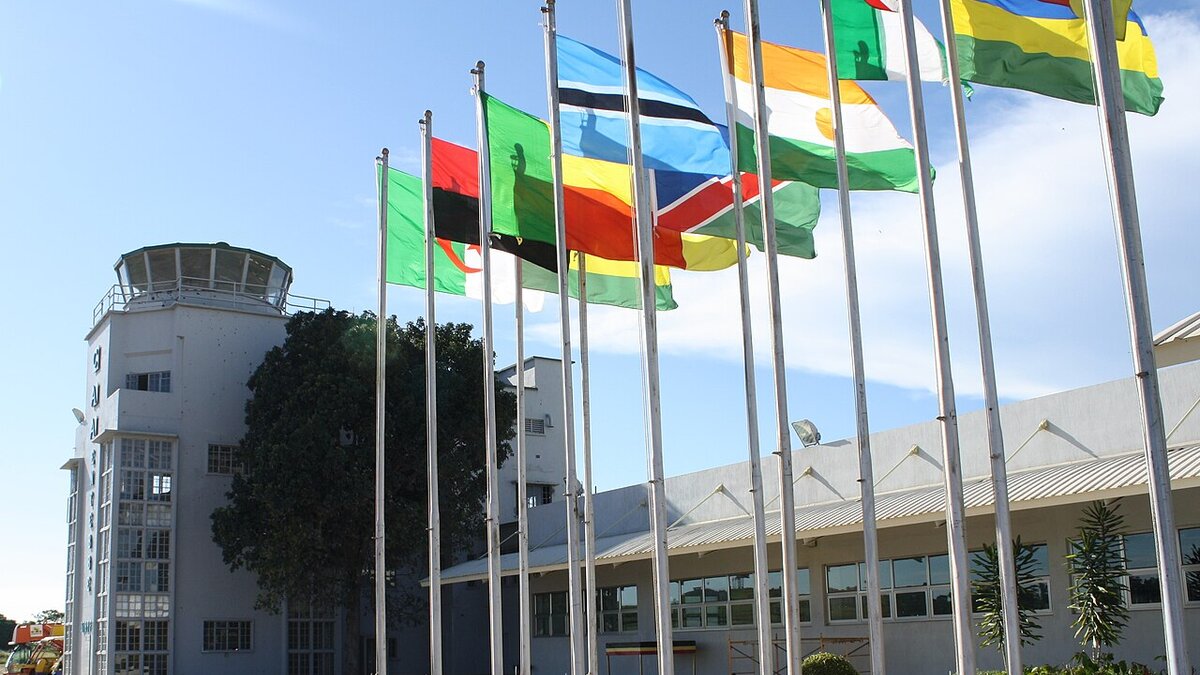
Cover image: the terminal at Entebbe International Airport in Uganda — photo by LTC David Konop, United States Army Africa (SETAF), Public Affairs Officer, Public domain, via Wikimedia Commons.
US Ebola travel restrictions tied to the Bundibugyo virus outbreak in Central and East Africa remain firmly in place this week, and they affect anyone routing home from the region. Travellers — including US citizens — who have been in the Democratic Republic of the Congo (DRC) within the past 21 days cannot board commercial flights to the United States, according to the US Centers for Disease Control and Prevention (CDC). Travellers who have been in Uganda or South Sudan (but not the DRC) within 21 days must enter the US through one of four designated screening airports: Washington Dulles (IAD), Atlanta (ATL), Houston Intercontinental (IAH) and New York JFK. The federal order behind these rules was renewed on 12 August 2026 and runs until 4:59pm ET on 11 September 2026, unless the CDC amends or extends it again — as it has done repeatedly since the restrictions began in May. Here is what the rules actually require, how the outbreak stands, and what it means if you have an East Africa trip on the books.
Can you fly to the US from the DRC right now?
Not directly, and not indirectly either. The CDC's travel health notice states that travellers who have been in the DRC within 21 days of their flight will not be allowed to board commercial flights with US destinations. The rule applies to everyone, US passport holders included.
In practice, that means anyone leaving the DRC must spend a full 21 days outside the country before flying to the United States. Crucially, the underlying order covers people who have "departed from, or were otherwise present within" the DRC — so an airport transit stop in the DRC counts as presence and restarts your 21-day clock. If you must connect through the region, route via hubs such as Nairobi, Addis Ababa or Kigali instead.
A separate but parallel order suspends US entry for most foreign nationals who have been in the DRC, Uganda or South Sudan in the previous 21 days; immigration law firms tracking the order report it extends even to US lawful permanent residents, with exemptions for US citizens, US nationals and members of the US armed forces.
Which US airports screen travellers from Uganda and South Sudan?
Travellers who have been in Uganda or South Sudan — and not the DRC — within 21 days of arrival face a lighter regime: they can still fly to the US, but airlines must route them through one of the four designated airports, where CDC staff conduct public health entry screening. Note that South Sudan is covered as a precaution because of its border with the outbreak zone; the World Health Organization (WHO) had reported no confirmed cases there as of 12 August 2026.
On arrival, expect a health questionnaire (covering where you went and any potential exposure), a temperature check, and collection of your US contact details. You will then receive daily symptom-monitoring text messages from the CDC for 21 days after leaving the affected country. You are not quarantined — you simply confirm you are symptom-free and are told to isolate and call ahead to a health provider if fever, muscle pain or rash develop.
| Where you have been (past 21 days) | The rule | What it means for you |
|---|---|---|
| DRC (including airport transit) | Cannot board US-bound commercial flights | Wait out 21 full days in a third country before flying to the US |
| Uganda or South Sudan (not DRC) | Must enter via IAD, ATL, IAH or JFK | Questionnaire, temperature check, then 21 days of CDC monitoring texts |
| Elsewhere in East Africa (Kenya, Tanzania, Rwanda) | No US entry restriction | Normal arrival; check State Department advisories before booking |
How serious is the outbreak?
Per the WHO's outbreak bulletin, as of 12 August 2026 there were 4,686 confirmed cases and 2,186 deaths — the overwhelming majority in the DRC (4,665 cases), with 20 cases and two deaths in Uganda and one travel-associated case in France. WHO calls it the largest Ebola outbreak ever documented in the DRC, surpassing the 2018–2020 epidemic, and it is widely reported as the second-largest recorded anywhere after West Africa in 2014–16. The crude case fatality rate in the DRC stands at 46.8%.
The epicentre is Ituri province, which accounts for roughly 85% of cases, with North Kivu next. There is no licensed vaccine specific to Bundibugyo virus; WHO reports vaccine and treatment trials are under way in the DRC. Notably, WHO itself advises against travel or trade restrictions on affected countries — the US measures go further than WHO guidance.
Is it safe to book a Uganda gorilla trek?
Uganda's picture has improved markedly. The country recorded 20 cases linked to the outbreak, and by early August more than 21 days had passed since its last confirmed patient was discharged — the epidemiological threshold that precedes an outbreak being declared over in a country. The CDC's travel health notice for the region sits at Level 2 ("practice enhanced precautions"), though within the DRC it advises avoiding all travel to Ituri and North Kivu provinces. The US State Department raised Uganda to Level 4 ("do not travel") in May and keeps the DRC at Level 4; advisory levels can move quickly as conditions change, as we saw when Jamaica's advisory was lowered earlier this year — check travel.state.gov for the current level before you commit.
Two practical points for safari planners. First, the screening rule applies wherever in Uganda you went — Bwindi's gorilla forests are far from the outbreak's DRC epicentre, but you will still be routed through a designated airport on the way home. Second, avoid any itinerary that dips across the DRC border (some Virunga add-ons do): even a day trip triggers the 21-day flight ban. Uganda has also closed most DRC border crossings except for essential cargo and response teams. If you would rather sidestep the region's uncertainty this season, combination trips such as Kenya safari-and-Seychelles-beach holidays are unaffected by the order.
What about airlines, refunds and travel insurance?
Airlines are enforcing the rules at check-in, since carriers face penalties for boarding restricted passengers, and several have adjusted routings to feed the four designated airports. If your itinerary is cancelled or forcibly rerouted, your rights follow the usual disruption framework — our guide to refunds when events disrupt travel explains when cash refunds are owed versus vouchers.
Insurance is the trap. Standard policies generally do not pay out if you cancel out of fear of an outbreak, and many exclude epidemics altogether unless you bought optional cover. "Cancel for any reason" (CFAR) upgrades, bought soon after your first trip payment, are the reliable route to recovering most costs. Check medical-evacuation terms too: repatriation from a country under US entry restrictions is complicated, and some evacuation providers exclude quarantinable diseases. Our explainer on travel insurance versus flight insurance covers which product protects what.
Frequently asked questions
Can I still travel to Uganda?
Yes — there is no US ban on travelling to Uganda, and by early August the country had gone more than 21 days without an active case. But the State Department raised Uganda to Level 4 ("do not travel") during the outbreak, so check the current advisory, and remember you must return to the US via Dulles, Atlanta, Houston or JFK and complete 21 days of CDC symptom monitoring.
Which US airports screen arrivals from Uganda and South Sudan?
Four designated airports handle all US-bound travellers who were in Uganda or South Sudan within the previous 21 days: Washington Dulles (IAD), Atlanta Hartsfield-Jackson (ATL), Houston George Bush Intercontinental (IAH) and New York JFK. Airlines must route affected passengers through these gateways, where CDC staff run a questionnaire and temperature check before onward travel.
What happens if I transit through the DRC?
Transit counts as presence. The CDC order covers anyone who "departed from, or was otherwise present within" the DRC in the past 21 days, so even a connecting stop at a Congolese airport bars you from boarding a US-bound commercial flight until 21 full days have passed. Route connections through Nairobi, Addis Ababa, Kigali or European hubs instead.
Does travel insurance cover Ebola-related cancellation?
Usually not, if you simply decide not to go. Fear of an outbreak is a standard exclusion, and many policies exclude epidemics entirely. You are typically covered if you contract the illness, and "cancel for any reason" upgrades — bought within days of your first trip payment — will refund most non-recoverable costs. Always read the epidemic and medical-evacuation clauses before buying.
How long do the US Ebola travel restrictions last?
The current order took effect on 12 August 2026 and runs until 4:59pm ET on 11 September 2026, but the CDC has extended it roughly every 30 days since May and can renew or amend it again. Treat the rules as open-ended until the WHO and CDC signal the outbreak is contained, and re-check CDC guidance shortly before you fly.
Sources
- CDC Travelers' Health — Ebola Bundibugyo Virus Disease in the Democratic Republic of the Congo and Uganda (Level 2 notice)
- CDC — Information for Travelers Returning from Ebola-Affected Areas
- World Health Organization — Disease Outbreak News: Ebola disease caused by Bundibugyo virus, DRC
- CDC Port Health — Order suspending the right to introduce certain persons from countries where a quarantinable communicable disease exists
- BAL Immigration News — CDC extends Ebola entry restrictions; CBP updates approved ports of entry
- US Department of State — Uganda Travel Advisory






Post a comment