

Amsterdam's governing coalition wants to raise the city's tourist tax from 12.5% to 20% by 2031 — already Europe's highest — stacking on the national 21% hotel VAT for a total levy of roughly 41%. Hoteliers say bookings are already falling.
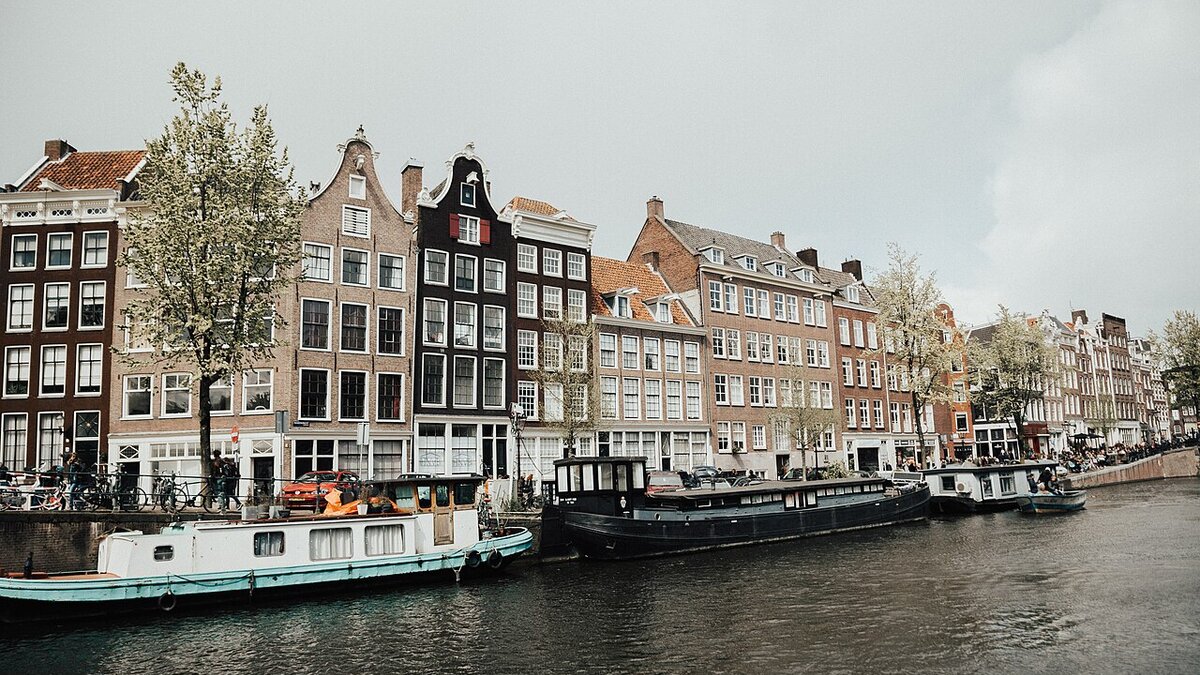
Cover image: canal houses and houseboats along an Amsterdam waterway in the city's UNESCO-listed canal ring — photo by Kaci Baum kacibaum, CC0, via Wikimedia Commons.
Amsterdam plans to raise its tourist tax from 12.5% to 20% of the room rate by 2031, a step-by-step increase that would give the Dutch capital one of the highest visitor levies in the world, on top of the Netherlands' 21% accommodation VAT. The plan is set out in the programme of the city's new governing coalition of PRO (formerly GroenLinks-PvdA) and D66, reported by NOS and Dutch media on 23–24 August: the rate goes to 16% in 2027, then rises one percentage point a year until it reaches 20%.
Amsterdam already charges Europe's highest tourist tax in the estimation of the Royal Dutch Hospitality Association (KHN), and the industry group says that after the increase only Bhutan would charge visitors more. For a €200-a-night room, the city levy alone would climb from €25 today to €40 by 2031 — before the €42 in VAT on the same booking, taking the total tax take to roughly €82 a night.
How much tax will you pay on an Amsterdam hotel stay?
Two separate charges stack on every overnight stay in the city:
| Charge | 2026 | 2027 | 2031 |
|---|---|---|---|
| City tourist tax (% of room rate) | 12.5% | 16% | 20% |
| National accommodation VAT | 21% | 21% | 21% |
| Combined levy | 33.5% | 37% | 41% |
The VAT jump is the quieter shock: the Netherlands raised accommodation VAT from 9% to 21% in January 2026, meaning the combined tax load on an Amsterdam hotel night has already gone from about 21.5% a year ago to 33.5% today — and would reach roughly 41% by 2031 under the coalition plan. Amsterdam's levy applies to hotels, B&Bs and short-stay rentals alike; the city also charges day-trippers a separate flat fee, introduced in 2024, for visitors arriving by passenger ship.
Why is Amsterdam raising the tourist tax again?
The stated goal is demand management, not revenue. Amsterdam's new administration has made no secret of its intent to shrink mass tourism's footprint: alongside the tax step-ups, the coalition has reiterated plans to close the sea-cruise terminal east of the central station to stop cruise ships disembarking day visitors into the old centre. The city of roughly 930,000 residents has spent a decade fighting overtourism — from the "stay away" campaign to bans on new hotels and tour-bus restrictions — and a percentage levy is the bluntest instrument left: it rises automatically with room rates, so it bites hardest in high season.
The Netherlands is not acting alone. Tourist taxes are spreading across Europe and Asia as destinations try to monetise or moderate visitor growth — Japan tripled its departure levy and restructured Kyoto's accommodation tax this year, and even remote destinations now cap or charge for access, as Greenland does with fees and limits on cruise-fjord visits. Amsterdam's difference is scale: no major European city has pushed a percentage levy this far.
What the higher Amsterdam tax means for hoteliers and travellers
The hotel industry says the policy is already working — in the wrong direction. KHN reports members are seeing a decline of around 10% in visitors since the earlier increases, with occupancy still acceptable but softening. There is also a displacement problem: the association warns tourists will simply stay in neighbouring municipalities with lower or no tourist taxes — Amstelveen and Zaanstad are the named beneficiaries — spending their money outside the city while still visiting its centre by day.
For travellers, the practical advice is arithmetic. On a €200-a-night booking, each percentage point of tourist tax is €2 a night; the 2027 step to 16% adds €7 a night to today's cost, and the full 2031 plan adds €15. Booking patterns that blunt the levy include staying in the suburbs (at the cost of the canal-ring location), travelling midweek in low season when the base rate — and therefore the tax — is lower, and watching for rate-inclusive deals where the levy is bundled. With European autumn hotel prices already falling, the tax is becoming a bigger share of the total bill precisely as rates soften.
Whether the schedule survives to 2031 is genuinely uncertain: each annual step needs council approval, Amsterdam's coalition politics are volatile, and a measurable demand shock — hoteliers point to the 10% decline — gives future councils a reason to pause. For now, though, the direction of travel is one-way: Amsterdam intends to be Europe's most expensive city to sleep in, and to price a slice of its visitors out entirely.
Frequently asked questions
How much is the tourist tax in Amsterdam?
Currently 12.5% of the room rate per night — Europe's highest, per the KHN. The coalition plan raises it to 16% in 2027, then one point a year to 20% by 2031.
When will Amsterdam's tourist tax increase?
The first increase, to 16%, is planned for 2027, with annual one-point steps thereafter. Each step requires approval in the city's annual budget round, so dates could shift.
What other taxes do tourists pay in Amsterdam hotels?
National VAT on accommodation is 21% as of January 2026 (up from 9%). Combined with the city levy, the total tax on a hotel night reaches roughly 41% by 2031, versus about 21.5% before the VAT rise.
Why is Amsterdam raising its tourist tax?
To manage overtourism. The coalition pairs the levy with measures like closing the sea-cruise terminal, aiming to reduce visitor numbers rather than simply earn from them.

Post a comment